
Pressure Transmitters
In industrial systems such as pump control panels, VFD constant pressure systems, hydraulic units, and water treatment plants, replacing a pressure transmitter is not as simple as matching pressure ranges and thread sizes. A common mistake during maintenance is failing to verify that the output signal of the new transmitter matches the PLC analog input requirements.
This guide outlines common issues and provides a systematic approach to troubleshooting signal mismatches.
Why Compatibility Matters
Even if the physical dimensions and pressure ratings are identical, incompatible signal types can cause significant system failures.
Common Mismatch Scenarios
| Original System | Incorrect Replacement | Consequence |
| 4–20mA (Current) | 0–10V (Voltage) | PLC cannot process the signal; constant error |
| 0–10V (Voltage) | 4–20mA (Current) | PLC input receives incorrect, unstable values |
| 2-wire 4–20mA | 3-wire voltage output | Wiring mismatch; failure to complete the loop |
| 4–20mA | 0–20mA | Zero-point offset and scaling errors |
| Analog Output | RS485 Modbus | Communication protocol mismatch |
| PNP / NPN Output | Analog Input (AI) | Digital/Analog signal incompatibility |
Pro-Tip: Always verify four parameters before replacement: Pressure Range, Thread Size, Output Signal (e.g., 4-20mA, 0-10V), and Wiring Configuration (2-wire/3-wire/4-wire).
Common Symptoms of Mismatched Transmitters
If you observe the following after a replacement, check your signal configuration immediately:
- HMI pressure reading is stuck at 0 or full scale.
- Pressure value is proportional but inaccurate.
- Pressure direction (logic) is reversed.
- VFD PID feedback is unstable, causing erratic pump performance.
- Incorrect triggering of high/low-pressure alarms.
Troubleshooting Procedure
Follow these steps to isolate the issue:
- Verify Specifications: Compare the nameplates of the original and new transmitters.
- Measure Signal: Use a multimeter to verify the actual output signal at the terminals.
- Check PLC Input: Ensure the PLC analog input module is configured for the correct mode (Current vs. Voltage).
- Simulate Signal: Inject a known mA or voltage signal into the PLC input to confirm the channel is functioning correctly.
- Verify Scaling: Ensure the software scaling (raw-to-engineering value) matches the new transmitter’s range.
- Validate System: Check HMI trends, PID loop feedback, and alarm thresholds.
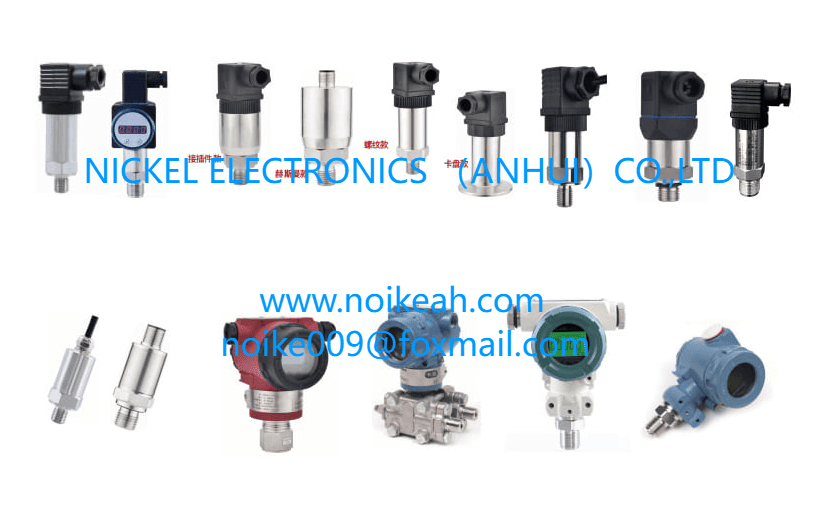
NOIKE-AH: Industrial Sensor Solutions
NOIKE-AH specializes in high-precision process instrumentation, including pressure transmitters, pressure switches, flow meters, and level sensors designed to integrate seamlessly into your automation cabinets.
Selection & Application Guide
- For PLC Current Inputs: Use 4–20mA pressure transmitters (ideal for long-distance, interference-prone environments).
- For VFD PID Feedback: Select based on the VFD’s specific analog input requirements (4–20mA or 0–10V).
- For PLC Voltage Inputs: Use 0–10V pressure transmitters.
- Local Monitoring: Supplement your system with digital pressure gauges for real-time verification.
- Safety Protection: Use intelligent pressure switches for high/low-pressure safety interlocks.
Conclusion
A wrong PLC reading after a transmitter replacement is typically caused by a signal mismatch, not a faulty unit. Always ensure the output signal, wiring, and PLC input modes are perfectly aligned.
Standard Replacement Sequence:
Verify Original Params → Confirm New Specs → Check Signal Output → Verify Wiring → Configure PLC AI Mode → Update Scaling → Test HMI/PID
Need professional support or product documentation? Visit the NOIKE-AH Official Website.
About NOIKE-AH
Nickel Electronics (Anhui) Co., Ltd (NOIKE-AH) is a global manufacturer of high-precision sensors for measuring and monitoring flow, pressure, temperature, level etc,.
With decades of engineering experience, NOIKE-AH provides reliable sensing solutions that ensure accuracy, efficiency, and safety across industries such as chemical processing, water treatment, food & beverage, pharmaceuticals, and energy.
Our intelligent measurement technology enables customers to gain real-time insights, improve process optimization, and achieve predictive maintenance through data-driven control.
Driven by innovation, NOIKE-AH continues to advance industrial automation with smart digital instruments, IIoT-ready solutions, and customized system integration, empowering industries worldwide to reach new standards in process reliability and performance.



