
Pressure Gauges
In industrial maintenance, repair, and operations (MRO) settings—such as pump rooms, hydraulic units, and water treatment skids—it is common for a newly installed pressure gauge to fail shortly after replacement. While it is easy to assume poor product quality, the root cause is frequently unhandled system dynamics.
Understanding the difference between a defective component and a systemic application issue is critical for maintenance engineers and procurement professionals.
Common Symptoms of System-Induced Gauge Failure
If your replacement gauge fails repeatedly at the same measuring point, the issue is likely environmental. Refer to the table below to identify potential causes based on failure patterns:
| Symptom | Likely Cause |
| Pointer bent, broken, or hitting stop pin | Sudden pressure spike |
| Pointer does not return to zero | Overpressure or clogging |
| Rapid pointer oscillation | Severe pulsation or vibration |
| Failure occurring after pump startup | Startup surge |
| Failure near hydraulic valve blocks | Hydraulic shock |
Why Mechanical Pressure Gauges Fail
Mechanical gauges (utilizing a Bourdon tube and gear movement) are precision instruments. When a transient pressure spike exceeds the gauge’s overpressure limit—even for a split second—the internal mechanism can sustain permanent damage.
According to industry leaders like WIKA and Swagelok, common sources for these damaging spikes include:
- Pump Dynamics: Start/stop surges or reciprocating, diaphragm, and plunger pump cycles.
- Flow Control: Sudden valve closing, check valve slam, or hydraulic valve switching.
- System Operation: Water hammer, compressor loading/unloading, and short VFD (Variable Frequency Drive) ramp times.
Industrial Solutions: Moving Beyond “Like-for-Like” Replacement
Replacing a failed gauge with an identical model often leads to a recurring cycle of failure. Instead, consider the following protective enhancements recommended by Ashcroft:
Recommended Mitigation Strategy
| Site Condition | Recommended Solution |
| Pressure Spike | Install a Pressure Snubber |
| Strong Pulsation | Install a Pulsation Dampener |
| High Vibration | Use a Liquid-Filled or Seismic Gauge |
| System Overpressure | Use a higher range gauge + Overpressure Protector |
| Hydraulic Shock | Use a Hydraulic Snubber + Relief valve check |
| Corrosive Medium | Use a Diaphragm Seal (compatible material) |
| Dirty/Slurry Medium | Use a Diaphragm Gauge or Flush Diaphragm |
The Correct Troubleshooting Sequence
To stop the cycle of recurring failures, follow this diagnostic workflow before ordering replacement parts:
- Analyze the failure pattern (physical condition of the old gauge).
- Evaluate the installation point (e.g., pump discharge vs. stable line).
- Audit system pressures (normal working vs. maximum/startup peaks).
- Identify sources of shock (vibration, water hammer, pulsation).
- Assess the medium (corrosiveness or viscosity).
- Select the appropriate protection accessories (snubbers, seals, etc.).
- Finalize the specification for the replacement model.
Industrial Solutions from NOIKE-AH
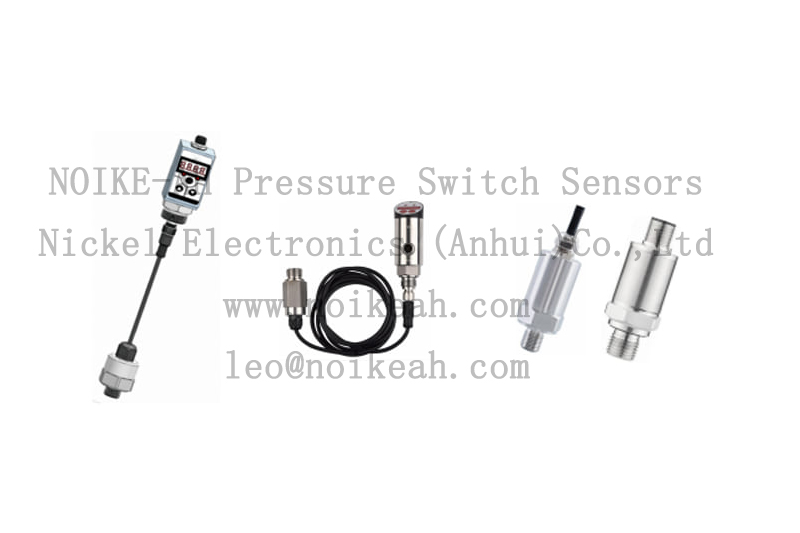
For MRO providers and plant maintenance teams, NOIKE-AH offers a comprehensive range of industrial instrumentation, including pressure gauges, switches, and transmitters.
NOIKE-AH Optimization Logic:
- Pump Discharge Issues: Liquid-filled gauge + Snubber.
- Diaphragm Pump Pulsation: Pulsation dampener + Pressure gauge.
- Hydraulic Systems: High-pressure gauge + Hydraulic snubber.
- Remote Monitoring: 4–20mA Pressure transmitter.
- Environmental Clogging: Flush diaphragm transmitter/gauge.
Conclusion: When a gauge fails, don’t just replace it—diagnose it. Eliminating the root cause of pressure spikes through proper accessory selection significantly extends the lifecycle of your instrumentation and reduces downtime.
For further technical support or to discuss your specific MRO requirements, contact the NOIKE-AH engineering team.
About NOIKE-AH
Nickel Electronics (Anhui) Co., Ltd. (NOIKE-AH) is a global manufacturer of precision flow, pressure, level, and temperature sensors and instrumentation. We provide reliable measurement solutions for water treatment, chemical processing, food & beverage, pharmaceuticals, energy, and other industrial applications. Our IIoT-ready products and customized solutions help customers improve process efficiency, equipment reliability, and operational safety.



