Coastal Petrochemical Instrumentation: How to Select Pressure Transmitters and Flowmeters in 4 Steps
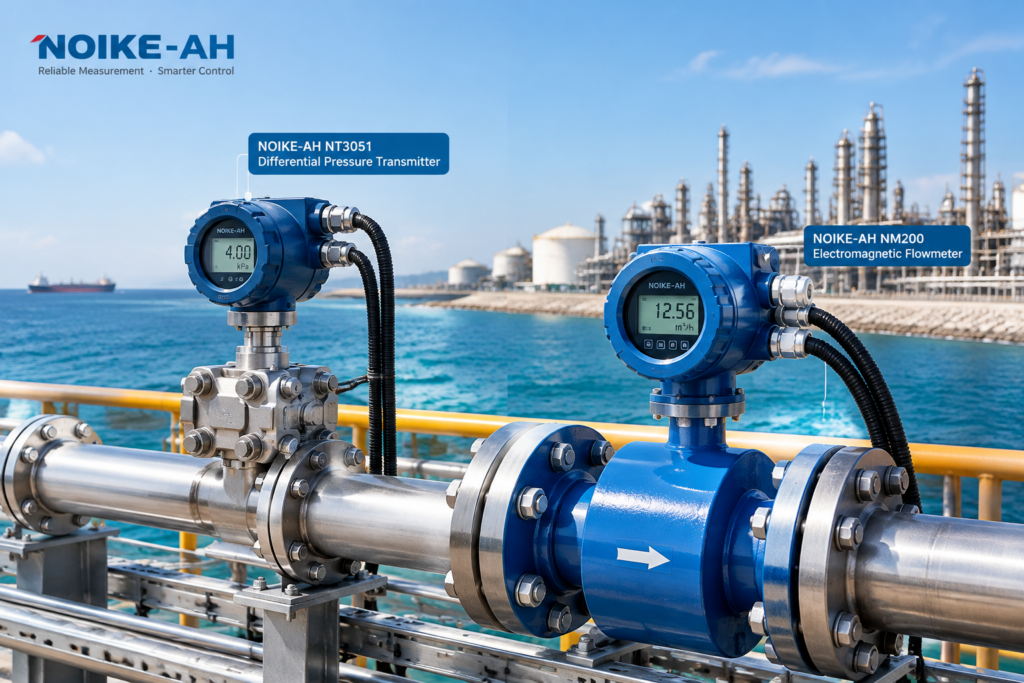
Coastal petrochemical plants expose industrial instruments to challenging atmospheric conditions, including airborne chlorides, high humidity, condensation, and, in some locations, industrial pollutants. These factors can increase corrosion risks, damage electrical connections, and shorten the service life of inadequately protected instruments.
For engineers working in coastal industrial hubs such as Jubail and Yanbu in Saudi Arabia, selecting a suitable pressure transmitter or flowmeter requires more than checking whether the product uses stainless steel or carries an IP protection rating.
The key is to evaluate process-wetted materials, external housing protection, coating requirements, electrical sealing, and environmental test evidence as separate but related selection criteria.
NOIKE-AH offers industrial pressure measurement and electromagnetic flow measurement products with different material and protection options. The appropriate configuration for a coastal petrochemical project should be confirmed against the actual site conditions and project specifications.
1. Why Coastal Petrochemical Environments Increase Instrument Corrosion Risks
1.1 Chloride Exposure and Localized Corrosion
Marine atmospheres can deposit chloride-containing salts on instrument housings, mounting hardware, cable entries, and other exposed surfaces. When moisture accumulates, these deposits can contribute to localized corrosion.
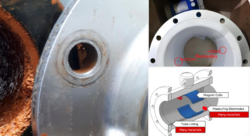
Stainless steel is not immune to every corrosion mechanism. Depending on the alloy, temperature, chloride concentration, surface condition, and exposure pattern, pitting corrosion and crevice corrosion may occur.
Potentially vulnerable locations include:
- Threaded joints and fasteners
- Gaps beneath brackets and mounting hardware
- Damaged coating edges
- Cable glands and electrical connection interfaces
- Areas where deposits remain wet for extended periods
Material selection should therefore consider the actual environment and the complete instrument assembly rather than relying on the stainless-steel designation alone.
1.2 Moisture Ingress and Electrical Reliability
Corrosion and moisture ingress are related but distinct failure mechanisms.
External corrosion can damage exposed components and protective finishes. Separately, inadequate sealing, damaged gaskets, incorrectly installed cable glands, or unsuitable electrical connections can allow moisture to enter an enclosure.
Moisture inside electrical compartments may cause insulation deterioration, corrosion of terminals, unstable signals, or electronic failure. The consequences depend on the instrument design, installation, and operating conditions.
For this reason, engineers should assess both external corrosion resistance and ingress protection when specifying field instruments.
2. Understanding C5, CX, and the Former C5-M Classification
ISO 12944 provides a framework for classifying atmospheric corrosivity and selecting protective coating systems for steel structures.
The 2018 edition introduced a revised classification framework that includes C1 through C5 and the additional CX category. Older documentation may refer to C5-M for marine environments and C5-I for industrial environments.
Under the revised framework, C5 generally refers to very high atmospheric corrosivity, while CX addresses extreme environments. The appropriate classification depends on the exposure conditions and the applicable standard requirements.
These categories should not be treated as product certifications. A site’s corrosivity category is not, by itself, proof that a particular pressure transmitter or flowmeter is suitable for installation there.
When evaluating a project, engineers should confirm:
- The specified corrosivity category and applicable standard edition
- Whether the instrument is installed indoors, outdoors, or in an offshore-related location
- The presence of chloride deposits, condensation, chemical pollutants, and direct washdown
- The required coating system, surface preparation, and acceptance criteria
- Any additional project-specific environmental or qualification requirements
ISO 12944 coating requirements for steel structures should not automatically be interpreted as a certification for a complete electronic instrument.
3. What Engineers Should Check When Selecting Instruments
3.1 Process-Wetted Materials
The materials exposed to the process medium must be compatible with the fluid’s chemistry, concentration, temperature, pressure, and operating conditions.
For pressure transmitters, this may include the isolation diaphragm and other wetted components. For electromagnetic flowmeters, electrode and lining materials are important selection factors.
A material suitable for the process medium is not necessarily the best material for the instrument’s external housing, and vice versa.
3.2 Housing Material and Protective Coating
The external housing faces atmospheric exposure rather than necessarily contacting the process fluid.
Depending on the design and site requirements, engineers may need to review the housing alloy, coating system, surface preparation, coating thickness, edge coverage, fasteners, and compatibility with cable-entry components.
Where a project specifies a heavy-duty coating system, request the applicable technical specification and evidence for the actual coating configuration. Do not assume that a generic statement such as “anti-corrosion coating” proves compliance with a C5 or CX requirement.
3.3 IP Protection and Electrical Sealing
An IP rating describes specified protection against solid-object ingress and water ingress under defined test conditions. It does not independently establish resistance to marine atmospheric corrosion.
The complete installation also matters. Cable glands, connectors, gaskets, covers, and installation practices must be suitable for the required environment.
Where IP68 is specified, confirm the applicable test conditions and supplied product configuration rather than assuming that every IP68 device has identical immersion performance or internal electronics construction.
3.4 Corrosion-Test Evidence
Ask the supplier to identify the exact model, housing configuration, coating system, test method, specimen preparation, exposure duration, and acceptance criteria covered by any corrosion-test report.
ASTM B117 and ISO 9227 are commonly referenced salt-spray test methods. However, salt-spray results should not be converted directly into years of field service. Their significance depends on the test configuration and evaluation criteria, and additional evidence may be necessary to assess real operating conditions.
4. NOIKE-AH Products to Consider During Technical Evaluation
NOIKE-AH provides industrial pressure and flow measurement instruments. The following models may be relevant to a project review, but their suitability for a particular coastal installation must be established from the selected configuration and project requirements.
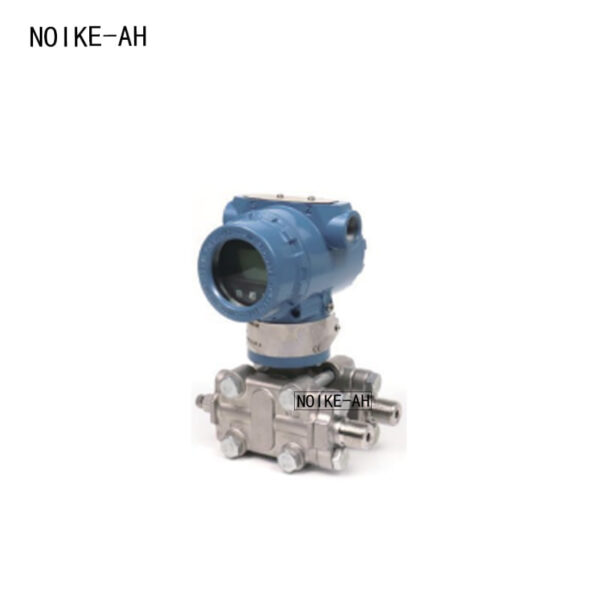
4.1 NT3051 Differential Pressure Transmitter
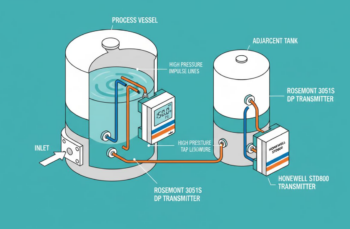
The NOIKE-AH NT3051 Differential Pressure Transmitter is designed for differential-pressure measurement and can also support pressure, flow, level, and density applications depending on the installation.
Published specifications include:
- Protection rating: IP68
- Housing material: Cast aluminum
- Wetted material options: 316L stainless steel, Hastelloy C, and tantalum
- Output signal: 4–20 mA, with optional HART communication
- Measurement range: 0–100 kPa to 10 MPa
- Process temperature: -20°C to +85°C
- Ambient temperature: -20°C to +80°C
These specifications provide a starting point for technical evaluation. The listed IP68 rating should not be treated as proof of C5/CX atmospheric corrosion resistance, a particular coating qualification, or internal deep-potting construction.
For a coastal project, confirm the external housing protection, coating availability, cable-entry configuration, and applicable environmental test documentation with the supplier.
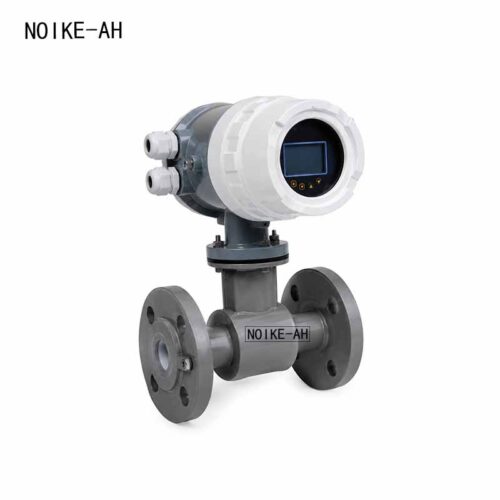
4.2 NM200 Series Electromagnetic Flowmeter
The NOIKE-AH NM200 Series Electromagnetic Flowmeter measures the flow of conductive liquids and conductive slurries using electromagnetic induction.
Published specifications and options include:
- Nominal diameter: DN10–DN1000
- Minimum conductivity: 5 μS/cm
- Accuracy: ±0.5% of reading, with optional ±0.3% or ±0.2%
- Electrode material options: 316L stainless steel, platinum-iridium, Hastelloy, tantalum, and titanium
- Lining options: Chloroprene rubber, PTFE, FEP, and polyurethane rubber
- Housing material: Carbon steel as standard, with stainless steel as an option
- Protection ratings: IP65 and IP68 options
- Installation configurations: Integral and remote types
Electrode and lining selection should be based on the process medium. Housing and converter protection should be evaluated separately for the installation environment.
The published IP65/IP68 options do not, on their own, establish compliance with a specified marine coating system or demonstrate a particular salt-spray test result.
5. A Practical Supplier Verification Checklist
Before approving an instrument for a coastal petrochemical project, engineers and procurement teams should request confirmation of the following items.
| Verification item | What to confirm |
|---|---|
| Site environment | Project corrosivity category, location, humidity, chloride exposure, and pollutants |
| Process compatibility | Wetted materials, process temperature, pressure, and chemical compatibility |
| External housing | Housing material, coating specification, and exposed-component protection |
| Ingress protection | IP rating and the test conditions applicable to the supplied configuration |
| Electrical connections | Cable glands, connectors, gaskets, and installation requirements |
| Corrosion testing | Actual test report, tested configuration, method, duration, and acceptance criteria |
| Hazardous-area requirements | Applicable certification and marking, where required by the project |
| Commercial requirements | Quotation, confirmed lead time, customization scope, and delivery documentation |
If a project requires a specific C5 or CX coating system, request written confirmation that the proposed instrument configuration meets the stated requirements. Where supporting evidence is unavailable, treat the requirement as unresolved rather than assuming compliance.
6. Frequently Asked Questions
Does IP68 mean a pressure transmitter is suitable for C5 or CX environments?
No. IP68 addresses specified ingress-protection conditions. Atmospheric corrosion resistance and coating-system qualification require separate evaluation.
Is 316L stainless steel always sufficient for coastal petrochemical installations?
No material should be selected on grade alone. Chloride exposure, temperature, crevices, surface condition, and the actual service environment affect corrosion risk. The required alloy should be evaluated against the project conditions.
Can salt-spray test hours be converted into years of service?
Not reliably as a general rule. Salt-spray testing can provide comparative or quality-control information under defined conditions, but it does not independently establish service life in a natural marine atmosphere.
Can the NT3051 or NM200 be used in a coastal petrochemical plant?
Both are industrial measurement products that can be considered during technical evaluation. Final suitability depends on the specific model and configuration, site conditions, project specifications, and the evidence available for the required environmental protection.
What information should be provided for a corrosion-resistant instrument quotation?
Provide the instrument type, process conditions, required materials, site environment, corrosivity category, specified coating system, ingress-protection requirement, hazardous-area requirements, and any mandatory testing or certification documents.
Conclusion
Reliable instrument selection for coastal petrochemical facilities requires a complete assessment of process compatibility, external corrosion protection, ingress protection, electrical sealing, and supporting test evidence.
NOIKE-AH pressure transmitters and electromagnetic flowmeters offer product options that can be reviewed against these engineering requirements. The correct selection should be based on the exact model and configuration, with any required coating qualification, corrosion testing, and project compliance confirmed before purchase.
For a technical review, provide the intended application, process medium, installation environment, and project specification. These details help determine which instrument and configuration should be evaluated.