
Key Takeaways (TL;DR)
- Measurement Focus: Conventional sensors measure macroscopic system pressure relative to atmosphere/vacuum, while Micro Differential Pressure Sensors (MDPS) measure the minute pressure difference between two fluid nodes.
- Range & Sensitivity: MDPS operates in ultra-low ranges (e.g., 10 Pa to 10 kPa) with extremely high sensitivity, unlike conventional sensors handling up to 100 MPa.
- Core Challenge: The biggest technical hurdle for MDPS is Static Pressure Resistance—surviving massive pipeline pressure without damaging the thin diaphragm or shifting the zero point.
- Applications: Use MDPS for HVAC, cleanroom environments, and ultra-low flow monitoring; use conventional sensors for hydraulic and overall pipe network safety.
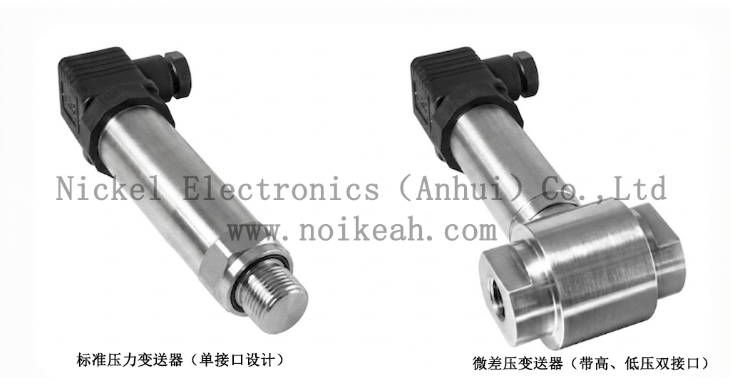
What is the Fundamental Difference?
In the field of industrial instrumentation, distinguishing between a conventional pressure sensor and a Micro Differential Pressure Sensor (MDPS) is crucial. Although both measure “pressure,” their underlying hardware designs and core technical specifications are fundamentally different due to massive variations in measurement references and scale dimensions.
Conventional pressure sensors (typically Gauge or Absolute pressure sensors) measure the physical pressure at a single node relative to the local atmospheric pressure or an absolute vacuum. They focus on the macroscopic force applied to the overall system and usually feature a single-port design.
In contrast, a Micro Differential Pressure Sensor (MDPS) measures the pressure drop or difference between two fluid nodes in a system (ΔP = P1 – P2). The term “micro” highlights its core function: handling extremely low-range, weak pressure differences (e.g., a few hundred to a few thousand Pascals) using a dual-port design (High/Low).
Core Technical Specifications Comparison
To accurately capture minute pressure differences, the technical requirements for micro differential pressure transmitters are much more stringent. Here is a direct comparison:
| Technical Specification | Conventional Pressure Sensor | Micro Differential Pressure Sensor (MDPS) |
| Typical Range | 10 kPa to 100 MPa | 10 Pa to 10 kPa (Ultra-low range) |
| Sensitivity | Standard | Extremely High (e.g., 4-5 mV/V/kPa) to capture minute deformations |
| Static Pressure Resistance (One-Way Overload) | Standard (Typically 2-3x full scale) | Extremely High (Must resist tens of MPa without drifting) |
| Temperature Drift (TCO/TCS) | Controllable impact | Highly Sensitive; zero drift can easily drown out the signal |
| Physical Interface | Single Port (Thread, flange, flush) | Dual Ports (High-pressure H / Low-pressure L) |
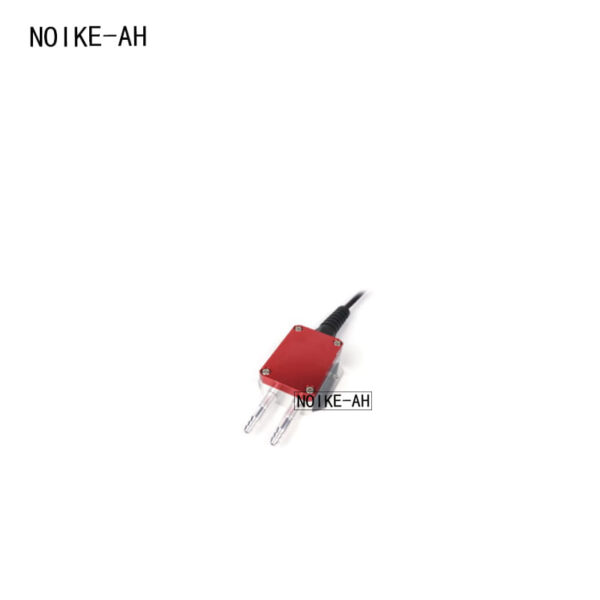
Differential Pressure Transmitter NT310 series
Key Technology Deep Dive: Why MDPS is Harder to Engineer
When selecting industrial instrumentation for precision environments, static pressure resistance and temperature drift are the primary selling points of high-end micro differential pressure transmitters.
1. Diaphragm Design and Sensitivity Limits
At ultra-low ranges (e.g., 0-500 Pa), the pressure-sensing diaphragm of an MDPS must be extremely thin (typically 8-12 μm). To ensure linearity while maximizing sensitivity, advanced MDPS units utilize custom-shaped diaphragms with boss or beam structures—often manufactured using Silicon Micromachined MEMS Technology. Conventional sensors, measuring higher forces, rely on thicker, uniform flat or corrugated diaphragms.
2. Static Pressure Resistance (The Core Engineering Challenge)
In real-world industrial applications, the base static pressure inside a pipeline can reach 10 MPa to 40 MPa, yet the required pressure difference to measure might only be 1 kPa. If a valve is mistakenly closed, creating uneven force, a standard thin diaphragm will instantly rupture.
Leading MDPS transmitters solve this via a Dual Isolation Diaphragm Design and a central rigid overload protection structure. For example, transmitters utilizing advanced monocrystalline silicon technology feature internal suspended silicon chips. These designs can absorb massive static pressure impacts, ensuring the core sensing elements remain undamaged and the zero point remains stable.
3. Temperature Coefficient Compensation (TCO/TCS)
Because MDPS electrical signals are incredibly weak, minor ambient or media temperature fluctuations cause structural materials to thermally expand or contract. This creates zero-output (TCO) and sensitivity (TCS) drifts that can overwhelm the actual differential pressure signal. Premium micro differential pressure devices mitigate this through minimal packaging stress and internal ASIC chips executing high-order polynomial algorithms for active temperature compensation.
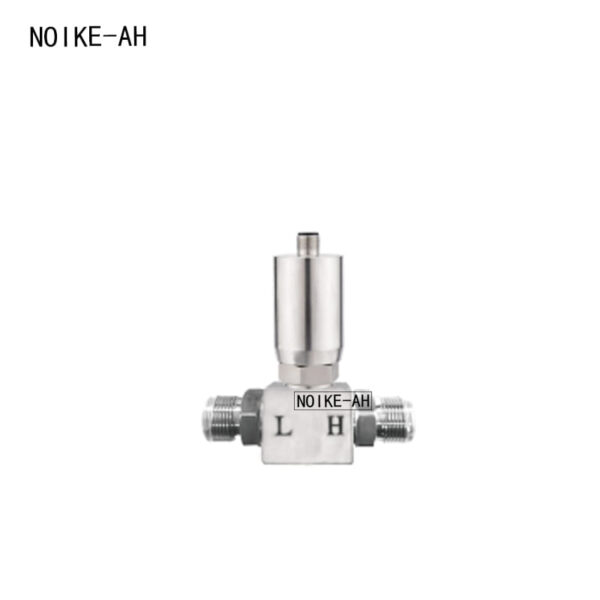
Electronic Digital Differential Pressure Switch Sensor NT80D series
Typical Application Scenarios
Choosing between the two depends entirely on your process control goals:
Conventional Pressure Sensors: Best for single-point status safety and control.
- Hydraulic system pipe network pressure.
- Air compressor outlet pressure monitoring.
- Boiler steam pressure control.
Micro Differential Pressure Sensors (MDPS): Best for flow, pressure drop, and micro-environment monitoring.
- Ultra-Low Flow Measurement: Paired with orifice plates, Venturi tubes, or Annubar tubes to calculate low-velocity gas flow.
- Cleanroom & Micro-Environment Control: Monitoring micro-positive pressure (10-15 Pa) in semiconductor fabs, pharmaceutical cleanrooms, or isolation wards to prevent unpurified air intrusion.
- HVAC Filter Monitoring: Measuring the minute pressure drop across industrial dust collectors or HVAC filters to trigger maintenance alerts.
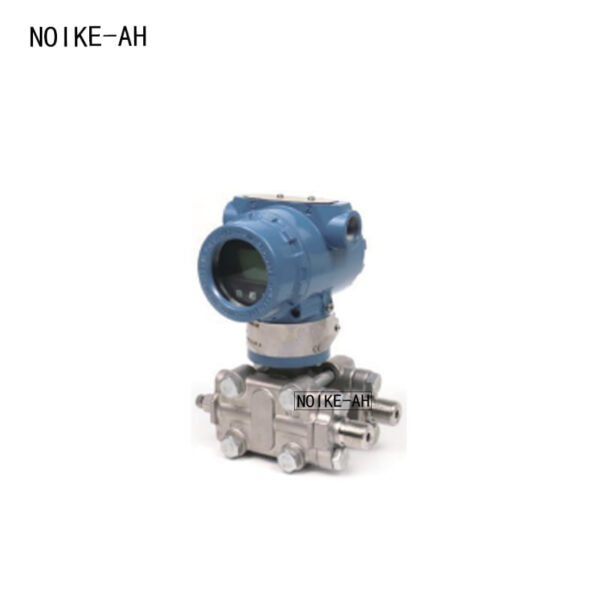
Intelligent pressure transmitter NT3051 series
Frequently Asked Questions (FAQs)
Q: Why can’t I just use two conventional pressure sensors to calculate differential pressure?
A: While mathematically possible (P1 – P2), subtracting the values of two high-range conventional sensors introduces massive compounding errors. The inherent error margins of the sensors are often larger than the micro differential pressure you are trying to measure. An MDPS measures the difference directly mechanically, ensuring extreme accuracy.
Q: What happens if a micro differential pressure sensor is subjected to one-way overload?
A: If it is a standard sensor, the diaphragm will rupture. However, high-quality industrial MDPS units are equipped with rigid one-way overload protection structures (like suspended silicon chips) that allow them to withstand high static pressure on a single side without structural damage or signal drift.



