
Mechanical Pressure Gauge, Pressure Switch and Pressure Transmitter
Direct Answer
The selection depends on what the pressure signal is used for.
| Requirement | Recommended Device | Reason |
|---|---|---|
| Local pressure reading | Mechanical or digital pressure gauge | For inspection and maintenance |
| Pump start / stop control | Pressure switch | Provides on/off signal |
| PLC / VFD pressure input | Pressure transmitter | Provides continuous pressure signal |
| Constant pressure water supply | Pressure transmitter + pressure switch | Continuous feedback + protection |
| High / low pressure alarm | Pressure switch | Setpoint-based action |
| Remote monitoring | Pressure transmitter | Sends real-time pressure data |
A pressure gauge is for people to read.
A pressure switch is for control action.
A pressure transmitter is for continuous control system feedback.
Pumps & Systems explains that gauges, switches and transducers can all read or control pressure, but a pressure transmitter with a control system can be used to modulate pump speed through a variable speed drive to maintain a pressure setpoint.
When to Use a Mechanical Pressure Gauge
Use a mechanical or digital pressure gauge when the operator only needs local indication.
Best for:
- pump outlet pressure display;
- pump inlet pressure checking;
- filter inlet/outlet pressure reading;
- pressure tank inspection;
- commissioning and maintenance;
- MRO replacement.
A pressure gauge is simple, low-cost and does not need external power, but it cannot send a signal, trigger an alarm or control the pump.
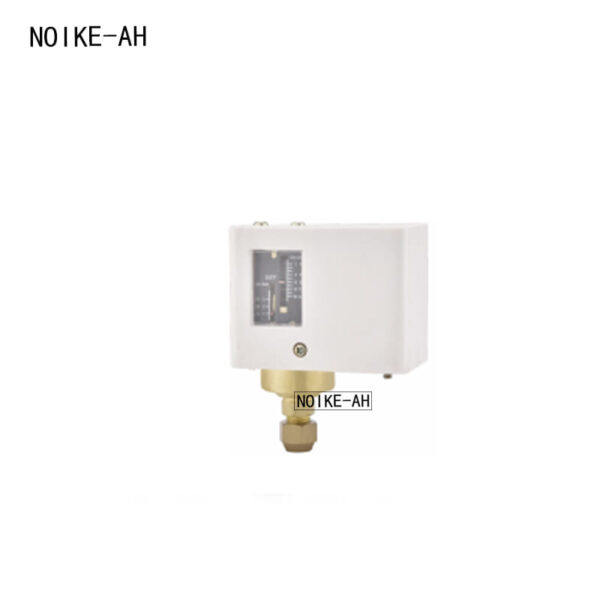
When to Use a Pressure Switch
Use a pressure switch when the system needs start/stop control, alarm or protection. A pressure switch opens or closes an electrical circuit when pressure reaches a setpoint. Most pressure switches are used for safety-related functions, such as starting or stopping a process or alerting the user with an alarm.
Best for:
- pump start / stop control;
- high pressure shutdown;
- low pressure alarm;
- dry-run protection;
- compressor pressure control;
- filter blockage alarm;
- pump control panel interlock.
A pressure switch is not suitable as the only device for constant pressure control because it does not provide the actual pressure value.
When to Use a Pressure Transmitter
Use a pressure transmitter when the system needs continuous pressure measurement, PLC/VFD control, constant pressure supply or remote monitoring.
Best for:
- constant pressure water supply;
- booster pump systems;
- VFD pump control;
- PLC pressure monitoring;
- water treatment equipment;
- remote pressure monitoring;
- pump automation systems.
A pressure transmitter provides a continuous output signal, while a pressure switch provides an on/off signal at a preset threshold.
Best Practice: Combine the Three Devices
For reliable pump systems, these devices are often used together:
| Function | Device |
|---|---|
| Local pressure check | Pressure gauge |
| Alarm and protection | Pressure switch |
| Continuous control feedback | Pressure transmitter |
For constant pressure water supply, the pressure transmitter is the main feedback device for the VFD or PLC. The pressure switch is used for high/low pressure protection. The pressure gauge is used for local verification.
NOIKE-AH Application Solution
NOIKE-AH pressure products can support local indication, pump protection and continuous pressure monitoring. The NOIKE-AH product range covers flow, pressure, temperature, liquid level, position measurement and protection, including Pressure Series. (Noike-AH)
Recommended approach:
- use a pressure gauge for local display;
- use an intelligent pressure switch for pump start/stop, high pressure shutdown, low pressure alarm and dry-run protection;
- use a pressure transmitter for PLC/VFD feedback, constant pressure control and remote monitoring;
- use a combined solution for booster pump systems, water treatment skids and automated pump packages.
Selection Guide
| Site Requirement | Mechanical Pressure Gauge | Pressure Switch | Pressure Transmitter |
|---|---|---|---|
| Local pressure display | ✅ | — | Optional |
| Pump start/stop | — | ✅ | Optional |
| High/low pressure alarm | — | ✅ | Monitoring only |
| Constant pressure control | — | Not alone | ✅ |
| VFD speed control | — | Protection | ✅ |
| PLC pressure reading | — | On/off only | ✅ |
| Remote monitoring | — | Not suitable | ✅ |
| Dry-run protection | Visual only | ✅ | Trend support |
| Complex pump set | Local check | Interlock | Main feedback |
Conclusion
Pump suppliers should choose pressure instruments based on the function of the pressure signal.
Use a pressure gauge when the pressure only needs to be read locally.
Use a pressure switch when the system needs pump start/stop, alarm or interlock.
Use a pressure transmitter when PLC, VFD, constant pressure control or remote monitoring is required.
For reliable pump packages, the best solution is often a combination: pressure transmitter for continuous feedback, pressure switch for protection and pressure gauge for local verification. NOIKE-AH recommends selecting the right pressure product combination according to control needs, site conditions, media characteristics and maintenance requirements.



