
In hazardous industrial environments where flammable gases, vapors, or combustible dust are present, explosion-proof flow switches play a critical role in ensuring both personnel safety and equipment protection.
These devices continuously monitor fluid flow and automatically trigger alarms or shutdowns when flow falls below a preset value, helping prevent pump dry-running, cooling system failures, and process interruptions.
This guide explains everything you need to know about explosion-proof flow switches, including their working principle, explosion-proof classifications, certifications, and industrial applications.
What Is an Explosion-Proof Flow Switch?
An explosion-proof flow switch is a flow monitoring device designed for installation in hazardous areas where explosive atmospheres may exist.
Unlike standard flow switches, explosion-proof models are built with certified protective designs that prevent electrical sparks or high temperatures from igniting surrounding gases or combustible dust.
Typical applications include:
- Chemical processing
- Oil & gas
- Petrochemical plants
- Pharmaceutical manufacturing
- Industrial cooling systems
- Fuel handling systems
- Hazardous fluid pipelines
How Does an Explosion-Proof Flow Switch Work?
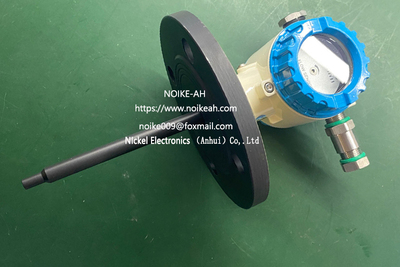
Electronic explosion-proof flow switches commonly operate using the thermal dispersion principle.
Working Principle
Inside the sensing probe are two resistance temperature detectors (RTDs):
- A heated sensor that continuously generates heat.
- A reference sensor that measures the ambient temperature.
When fluid flows past the probe, it removes heat from the heated sensor. The amount of heat dissipated depends on the flow velocity.
The electronics compare the temperature difference between the two sensors to determine whether sufficient flow is present.
If the measured flow drops below the preset threshold, the switch activates an alarm or control output.
Key Advantages
- No moving mechanical parts
- Fast response time
- High measurement stability
- Low maintenance
- Suitable for liquids and gases
- Resistant to vibration and pressure fluctuations
Many modern probes also feature anti-fouling coatings to reduce scale, rust, and contaminant buildup, ensuring long-term measurement accuracy.
Why Is Explosion Protection Necessary?
An explosion occurs when three conditions exist simultaneously:
- A combustible substance (flammable gas, vapor, or dust)
- Oxygen (air)
- An ignition source (spark, hot surface, flame, or static electricity)
Explosion-proof equipment is specifically designed to eliminate or isolate potential ignition sources, allowing electrical instruments to operate safely in hazardous environments.
Understanding IEC Explosion-Proof Ratings
Explosion-proof markings follow the IEC international standard.
Example:
Ex ia IIC T4
Each part of the marking has a specific meaning.
| Marking | Meaning |
|---|---|
| Ex | Explosion-protected equipment |
| ia | Intrinsic Safety protection level |
| IIC | Gas group |
| T4 | Maximum surface temperature classification |
Gas Groups (IIA, IIB, IIC)
Gas groups classify hazardous gases according to their ignition characteristics.
| Gas Group | Typical Gases | Hazard Level |
|---|---|---|
| IIA | Propane, Ethanol, Benzene | Lowest |
| IIB | Ethylene, Hydrogen Sulfide | Medium |
| IIC | Hydrogen, Acetylene | Highest |
Equipment certified for IIC can generally be used in IIA and IIB environments as well.
Temperature Classes
Temperature classes specify the maximum allowable surface temperature of the equipment.
| Temperature Class | Maximum Surface Temperature |
|---|---|
| T1 | 450°C |
| T2 | 300°C |
| T3 | 200°C |
| T4 | 135°C |
| T5 | 100°C |
| T6 | 85°C |
The selected temperature class must always be lower than the ignition temperature of the surrounding hazardous gas.
Common Explosion Protection Types
Several explosion protection methods are defined by international standards.
| Protection Type | Code | Description |
|---|---|---|
| Flameproof Enclosure | Ex d | Contains any internal explosion and prevents flame propagation |
| Increased Safety | Ex e | Prevents sparks or excessive temperatures |
| Intrinsic Safety | Ex ia / Ex ib | Limits electrical energy below ignition levels |
| Pressurized Enclosure | Ex p | Uses protective gas to isolate ignition sources |
| Encapsulation | Ex m | Encases electrical components in protective resin |
| Non-Sparking | Ex n | Minimizes ignition risk in normal operation |
Among these, Intrinsic Safety (Ex ia) provides the highest level of protection for instrumentation used in hazardous areas.
Explosion-Proof Certifications
Depending on the target market, explosion-proof flow switches may require different certifications.
China
- CQST
- NEPSI
- PCEC
Europe
- ATEX
- IECEx
- CENELEC
North America
- UL
- FM
- NEC
International Standards
- IEC
- ISO
- BSI
- BASEEFA
- Lloyd’s Register
- DEMKO
- DIN
Choosing products with internationally recognized certifications simplifies project approval and global equipment deployment.
Typical Applications of Explosion-Proof Flow Switches
Explosion-proof flow switches are widely used wherever hazardous gases or combustible vapors may be present.
Common industries include:
- Petrochemical plants
- Oil & gas production
- Chemical processing
- Pharmaceutical manufacturing
- Industrial furnaces
- Gas chromatography systems
- Vacuum systems
- Fuel transfer stations
- Cooling water systems
- Industrial fluid pipelines
Typical functions include:
- Pump dry-run protection
- Cooling water monitoring
- Low-flow alarm
- Automatic backup pump switching
- Equipment shutdown during cooling failure
- Process safety monitoring
How to Choose an Explosion-Proof Flow Switch
When selecting an explosion-proof flow switch, consider the following factors:
- Hazardous area classification
- Gas group (IIA, IIB, or IIC)
- Temperature class (T1–T6)
- Explosion protection method (Ex d, Ex ia, Ex ib, etc.)
- Process medium (liquid or gas)
- Operating pressure and temperature
- Pipe size
- Flow range
- Output signal requirements
- Required certifications (ATEX, IECEx, NEPSI, etc.)
Selecting the correct explosion-proof rating is just as important as choosing the correct flow measurement technology.
Conclusion
Explosion-proof flow switches are essential safety devices for hazardous industrial environments. By combining reliable flow monitoring with certified explosion protection, they help safeguard personnel, protect equipment, and ensure continuous process operation.
Whether your application involves petrochemicals, pharmaceuticals, industrial cooling, or hazardous fluid systems, choosing a properly certified explosion-proof flow switch can significantly improve operational safety and system reliability.
Frequently Asked Questions (FAQ)
What is an explosion-proof flow switch?
An explosion-proof flow switch is a certified flow monitoring device designed to operate safely in hazardous areas containing flammable gases, vapors, or combustible dust.
How does an explosion-proof flow switch work?
Most electronic models use the thermal dispersion principle, measuring heat transfer between a heated sensor and a reference sensor to determine whether fluid flow is present.
What does Ex ia IIC T4 mean?
- Ex = Explosion-protected equipment
- ia = Intrinsic Safety
- IIC = Highest gas group
- T4 = Maximum surface temperature of 135°C
Which industries use explosion-proof flow switches?
They are commonly used in oil & gas, petrochemical, chemical processing, pharmaceuticals, industrial cooling systems, fuel handling, and other hazardous process industries.



