
Can Target Flow Meter Customization for Special Working Conditions?
Direct Answer
Yes. Target flow meters can generally be customized to match specific process conditions, especially when standard flow meter configurations cannot adequately match the medium, flow range, pressure, temperature, pipe size, connection, or installation requirements.
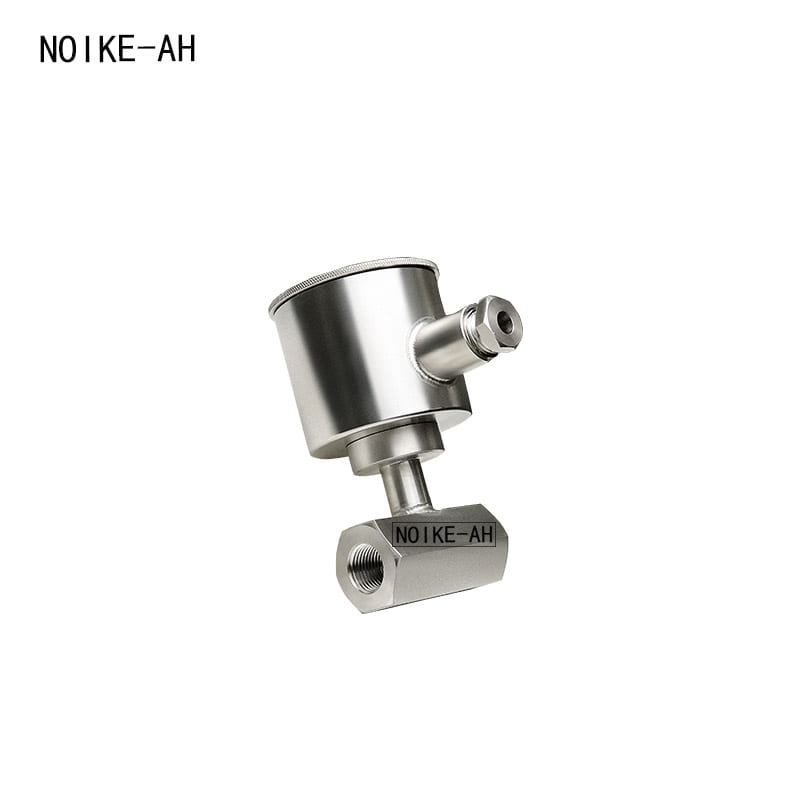
Unlike selecting a flow meter only by nominal pipe diameter, target flow meter selection should begin with the actual operating conditions of the process. Depending on the manufacturer and application, customization may involve the target sensing element, wetted materials, measuring range, process connection, installation structure, pressure and temperature rating, electrical output, compensation functions, and hazardous-area requirements.
However, customization does not mean that every parameter can be changed arbitrarily. The final design still needs to be verified against fluid properties, flow velocity, density, viscosity, pressure, temperature, pipe configuration, and required measurement performance.
Key Takeaways
- Target flow meters can be considered for high-viscosity, low-flow, low-Reynolds-number, or impurity-containing media where some conventional flow-meter technologies may face application limitations.
- Customization commonly involves the measuring range, target/sensing components, materials, process connection, installation type, pressure and temperature conditions, and signal configuration.
- The most important starting point is not the model number but the actual process data.
- For special applications, the manufacturer should evaluate the complete operating envelope before confirming the meter configuration.
- A customized meter should be treated as an engineering solution, rather than simply a standard meter with different dimensions.
1. Why Standard Flow Meters May Not Fit Special Working Conditions
In many industrial projects, the pipeline diameter and nominal flow range may look straightforward, but the actual process conditions can make flow measurement considerably more difficult.
For example:
- The medium has relatively high viscosity.
- The flow rate is very low.
- The medium contains suspended particles or impurities.
- The process temperature is unusually high or low.
- The pressure is high.
- The flow range changes significantly between minimum and maximum operation.
- The available installation space is limited.
- Existing pipeline flanges do not match the standard connection.
- The process requires an explosion-proof configuration.
- The customer needs a specific output signal or communication interface.
Under these circumstances, simply selecting a conventional flow meter according to DN size + nominal flow rate may not be sufficient.
Target flow meters measure the force generated when the flowing medium acts on a target element in the flow path. The measured force is related to fluid density and flow velocity, which makes the actual fluid properties important in the sizing process.
Therefore, the question should not simply be:
“What size target flow meter do we need?”
A more useful engineering question is:
“What is the actual operating condition, and how should the target flow meter be configured for it?”
2. What Types of Special Conditions Can Target Flow Meters Address?
Target flow meters are commonly considered for applications involving liquids, gases, and steam, including some high-viscosity and impurity-containing media. Industry references also describe their application in difficult measurement conditions where conventional technologies may have limitations.
Typical challenging conditions include:
| Actual Condition | What Needs to Be Considered |
|---|---|
| High-viscosity liquid | Density, viscosity, minimum flow and temperature |
| Low flow rate | Minimum measurable flow and target force |
| Impurity-containing medium | Target structure and material compatibility |
| High temperature | Wetted materials, sensor structure and installation |
| Low temperature | Material selection and environmental conditions |
| High pressure | Pressure rating and mechanical construction |
| Large pipeline | Full-bore vs. insertion configuration |
| Special flange | Process connection dimensions and standards |
| Hazardous area | Appropriate explosion-protection configuration |
| Variable operating conditions | Measuring range and compensation requirements |
The actual suitability must still be confirmed through application-specific sizing.
3. What Can Usually Be Customized?
3.1 Measuring Range
One of the most important customization considerations is the actual flow range.
A process may have:
- Minimum flow
- Normal operating flow
- Maximum flow
- Occasional peak flow
If the selected meter is sized only according to the maximum flow, the instrument may not provide the desired measurement performance at the normal or minimum operating point.
Target flow meter manufacturers may offer different sensing or force-measuring configurations to accommodate different flow ranges. Some published designs specifically describe changing the measuring range through the force-sensing component.
Therefore, the customer should provide the minimum, normal and maximum flow rate, rather than only one nominal flow value.
4. Target Plate and Sensing Structure
The target is one of the key elements of a target flow meter.
When fluid passes through the measuring tube, the target experiences a force generated by the flowing medium. The instrument converts this force into an electrical signal for flow calculation.
Depending on the application, manufacturers may design or select different sensing components according to:
- Flow range
- Pipe diameter
- Fluid density
- Fluid viscosity
- Flow velocity
- Required measurement performance
- Medium characteristics
This is particularly important when the process has very low flow velocity or high-viscosity fluid.
The target should therefore be treated as part of the measurement design rather than simply as a replaceable mechanical component.
5. Wetted Material Customization
Material selection becomes especially important when the measured medium is corrosive, chemically aggressive, high-temperature, or otherwise incompatible with standard materials.
Commonly published configurations include materials such as:
- Carbon steel
- 304 stainless steel
- 316/316L stainless steel
Some manufacturers also state that other corrosion-resistant materials can be supplied according to application requirements.
For a special application, material selection should consider:
- Chemical compatibility
- Medium temperature
- Operating pressure
- Mechanical strength
- Required service life
- Cleaning or maintenance requirements
The correct material should be determined from the actual medium composition and operating conditions, rather than selected only according to industry name.
6. Process Connection Customization
The connection between the flow meter and the existing pipeline is another common engineering requirement.
Depending on the product design, target flow meters may be available in configurations such as:
- Flanged connection
- Wafer/clamp connection
- Threaded connection
- Insertion connection
- Sanitary connection
- Integrated or remote installation configurations
Published target flow meter specifications show that different connection configurations are available, while some manufacturers also indicate that special flange machining can be provided according to customer requirements.
For an existing plant, the following information should be checked:
- Nominal pipe size
- Flange standard
- Pressure class/rating
- Bolt-hole arrangement
- Face-to-face dimension
- Available installation space
This can prevent a situation where the flow meter technically meets the measurement requirements but cannot be installed directly into the existing pipeline.
7. Pressure and Temperature Conditions
Pressure and temperature are two fundamental parameters in target flow meter customization.
For example, published products show substantially different operating ranges between different target flow meter designs. Some manufacturers publish configurations covering high-temperature or high-pressure applications, but these values are product-specific and should not be treated as universal specifications for all target flow meters.
For project evaluation, provide:
- Normal operating pressure
- Maximum operating pressure
- Minimum operating pressure
- Normal medium temperature
- Maximum temperature
- Minimum temperature
- Possible temperature fluctuations
For high-temperature applications, the temperature of the surrounding pipeline and installation environment may also need consideration.
8. Electrical Output and Communication
Customization does not only involve the mechanical structure.
Depending on the target flow meter design, available electrical configurations may include:
- 4–20 mA
- Pulse output
- RS485/RS232
- HART
- Local display
- Battery-powered operation
- External DC power
Different manufacturers offer different combinations, so the required output should be confirmed before ordering.
For an industrial automation project, it is important to determine whether the flow meter needs to connect to:
- PLC
- DCS
- SCADA
- Flow control system
- Remote monitoring system
The electrical interface should therefore be selected according to the actual control architecture.
9. Pressure and Temperature Compensation
For some applications, changes in pressure and temperature can affect the actual operating state of the medium.
Some intelligent target flow meter designs provide pressure and temperature compensation and can calculate flow under specified process conditions.
This can be relevant when:
- Gas density changes significantly with pressure.
- Steam conditions vary.
- Process temperature changes during operation.
- Standard-condition or compensated flow is required.
However, compensation should not be added simply because the application is “industrial.”
The required compensation should be determined from the medium, measurement objective and process conditions.
10. Explosion-Proof and Environmental Requirements
If the flow meter is installed in a hazardous area, the electrical and enclosure configuration becomes part of the instrument selection.
Published target flow meter products include intrinsically safe or flameproof configurations, but the exact certification and temperature class are product-specific.
When requesting a customized meter for a hazardous location, provide:
- Hazardous-area classification
- Required certification
- Gas/dust group where applicable
- Temperature class where applicable
- Ambient temperature
- Cable entry requirements
The final configuration should be confirmed against the applicable certification and project requirements.
11. Installation Conditions Also Need to Be Customized
A flow meter can have suitable measurement specifications but still perform poorly if the installation conditions are inappropriate.
Before selecting the instrument, check:
Pipeline
- Pipe diameter
- Pipe material
- Horizontal or vertical installation
- Flow direction
- Available straight pipe
- Nearby valves, elbows and pumps
Process
- Whether the pipe remains full
- Whether flow is continuous or intermittent
- Whether pulsation exists
- Whether gas may enter a liquid line
- Whether solids may settle
These factors are particularly important for difficult fluids.
For high-viscosity applications, temperature gradients can also change fluid viscosity. General flow-meter installation guidance for viscous fluids emphasizes controlling temperature gradients around the meter because viscosity changes can affect measurement behavior.
12. A Practical Example: High-Viscosity Liquid
Consider a process where a customer needs to measure a relatively viscous liquid.
The customer initially provides:
DN100 pipeline, liquid flow measurement required.
This information is not enough to finalize the flow meter.
A more useful engineering data sheet would include:
| Parameter | Required Information |
|---|---|
| Medium | Exact medium name/composition |
| Density | kg/m³ at operating condition |
| Viscosity | mPa·s or cP at operating temperature |
| Minimum flow | m³/h |
| Normal flow | m³/h |
| Maximum flow | m³/h |
| Operating pressure | MPa |
| Operating temperature | °C |
| Pipe size | DN100 |
| Connection | Flange standard |
| Installation | Horizontal/vertical |
| Output | 4–20 mA / RS485 / etc. |
| Environment | General / hazardous area |
| Required accuracy | Project requirement |
Only after these parameters are available can the manufacturer determine whether a target flow meter is suitable and what configuration is required.
13. Why “Customization” Should Start With Process Data
A common mistake in flow meter procurement is to begin with the product catalogue.
For difficult applications, the better sequence is:
Actual Working Condition → Medium Properties → Flow Range → Pressure & Temperature → Pipeline → Installation → Material → Signal → Final Meter Configuration
This sequence reduces the risk of selecting a meter that matches the pipe diameter but does not match the actual process.
14. When Should You Consider a Customized Target Flow Meter?
A customized target flow meter may be worth evaluating when several of the following conditions exist:
- Standard flow meter models cannot cover the required flow range.
- The medium has relatively high viscosity.
- The flow rate is relatively low.
- The medium contains impurities or suspended solids.
- The process temperature is outside common standard configurations.
- The pressure rating is unusual.
- The existing pipeline requires a special connection.
- The installation space is restricted.
- A particular material is required for compatibility.
- The application requires specific electrical outputs or communication.
- Hazardous-area requirements must be satisfied.
This does not mean a target flow meter is automatically the correct solution. It means the application has enough special characteristics that an engineering-based selection process is more appropriate than choosing a standard model from a catalogue.
15. What Information Should You Send to the Manufacturer?
For a customized target flow meter inquiry, providing complete process information can significantly improve the selection process.
Recommended RFQ Data
1. Medium
- Medium name
- Liquid / gas / steam
- Density
- Viscosity
- Corrosiveness
- Solid or impurity content
2. Flow
- Minimum flow
- Normal flow
- Maximum flow
- Expected flow fluctuation
3. Process Conditions
- Operating pressure
- Maximum pressure
- Operating temperature
- Maximum/minimum temperature
4. Pipeline
- DN size
- Pipe material
- Connection standard
- Horizontal or vertical installation
5. Instrument Requirements
- Accuracy requirement
- Display requirement
- Output signal
- Communication protocol
- Power supply
- Explosion-proof requirement
- IP/environmental requirement
With these parameters, the manufacturer can evaluate the target flow meter configuration rather than simply recommend a standard model.
16. FAQ
Can a target flow meter be customized?
Yes. Depending on the manufacturer and product design, customization can include measuring range, sensing/target components, materials, process connections, installation configuration, electrical outputs, compensation functions and environmental requirements.
Are target flow meters suitable for high-viscosity liquids?
They can be suitable for certain high-viscosity applications. Target flow meters are specifically described in industry references as being applicable to high-viscosity and low-Reynolds-number fluids. However, actual suitability depends on viscosity, density, flow range, temperature and other process parameters.
Can the target flow meter measure gas and steam?
Target flow meters can be designed for liquid, gas and steam measurement. The applicable pressure, temperature and flow range depend on the specific meter configuration.
Can the flange be customized?
Some manufacturers provide special flange machining or different connection configurations according to project requirements. The required flange standard and dimensions should be provided during inquiry.
Can the output signal be customized?
Depending on the product, available options may include 4–20 mA, pulse, RS485/RS232, HART and local display. The exact combination should be confirmed with the manufacturer.
Is customization necessary for every special application?
No. If a standard configuration already satisfies the medium, flow range, pressure, temperature, installation and signal requirements, a customized design may not be necessary.
Conclusion
Target flow meter customization should be based on the actual process rather than simply modifying a standard product specification.
For challenging applications, the key factors usually include medium properties, minimum/normal/maximum flow, density, viscosity, pressure, temperature, pipeline size, process connection, installation conditions, material compatibility and electrical requirements.
Target flow meters can be particularly considered for certain high-viscosity, low-flow or impurity-containing applications, but suitability must be verified using the actual operating data.
The most reliable approach is therefore:
Describe the actual working condition first → provide complete process data → evaluate the measurement principle → determine the target flow meter configuration → confirm the final technical specification.For details, please contact NOIKE-AH staff for consultation.



