
Electronic Water Meters vs. Mechanical Water Meters: Which Technology Delivers Better Long-Term Value?
In industrial plants, municipal water networks, commercial buildings, and utility distribution systems, water measurement directly affects operating costs, resource management, and system efficiency.
While mechanical water meters have served the industry for decades, electronic ultrasonic water meters are rapidly becoming the preferred solution for facilities that demand higher accuracy, lower maintenance, and digital connectivity.
So which technology is the better investment?
This guide compares Electronic Water Meters and Mechanical Water Meters from the perspective of:
- Working principle
- Accuracy
- Maintenance
- Pressure loss
- Low-flow performance
- Total Cost of Ownership (TCO)
- Typical applications
What Is a Mechanical Water Meter?
How It Works
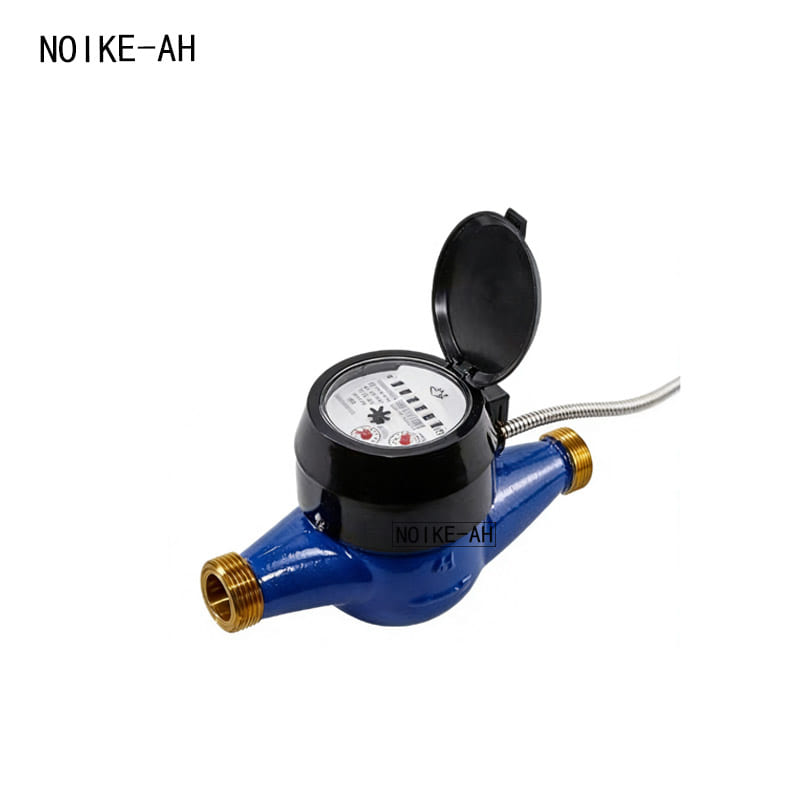
A mechanical water meter measures water consumption using moving internal components powered by the kinetic energy of flowing water.
The rotational speed of the impeller or turbine is converted into volumetric flow through a precision gear mechanism.
Common designs include:
- Multi-Jet Water Meter (DN15–DN50) – Ideal for residential and commercial applications.
- Horizontal Woltman Water Meter (DN50–DN500) – Designed for large-diameter pipelines and high-flow industrial systems.
Advantages of Mechanical Water Meters
Lower Initial Cost
Mechanical meters remain one of the most economical solutions for general water metering.
No External Power
They operate entirely through water flow without batteries or external electrical power.
Mature Technology
Widely accepted worldwide with abundant installation experience.
Limitations
Mechanical Wear
Continuous movement causes gradual wear of:
- Bearings
- Turbine blades
- Gear transmission
This eventually reduces measurement accuracy.
Poor Low-Flow Measurement
Small leaks often remain undetected because low flow cannot overcome mechanical friction.
Pressure Loss
The turbine creates resistance inside the pipeline, increasing pumping energy consumption.
What Is an Ultrasonic Electronic Water Meter?
Working Principle
An Electronic Water Meter uses ultrasonic transit-time technology instead of mechanical moving parts.
Two ultrasonic transducers alternately transmit sound waves upstream and downstream.
The velocity is calculated from the difference in travel time:
[
v=\frac{L}{2\cos\theta}\left(\frac{1}{t_{down}}-\frac{1}{t_{up}}\right)
]
Where:
- L = Acoustic path length
- θ = Sensor angle
- tdown = Downstream transit time
- tup = Upstream transit time
Because no moving parts are involved, measurement accuracy remains stable throughout the meter’s service life.
Advantages of Electronic Water Meters
Long-Term Measurement Accuracy
Without mechanical wear, accuracy remains consistent for 10–15 years.
Excellent Low-Flow Detection
Ultrasonic technology can detect extremely small flow rates, making it ideal for:
- Leak detection
- Night flow monitoring
- Water loss analysis
Zero Pressure Loss
The measuring tube contains no turbine or impeller.
Benefits include:
- Lower pump energy consumption
- Reduced operating costs
- Improved hydraulic efficiency
Smart Communication
Electronic meters support modern communication protocols including:
- Modbus RTU
- M-Bus
- Pulse Output
- RS485
- LoRaWAN
- NB-IoT
This enables seamless integration with:
- SCADA
- PLC
- EMS
- Smart Water Networks
- Industrial IoT Platforms
Low Maintenance
No lubrication.
No mechanical recalibration.
Minimal routine maintenance throughout the service life.
The Main Limitation
The only significant disadvantage is a higher initial purchase cost.
However, lifecycle savings typically offset the investment through:
- Higher billing accuracy
- Lower maintenance
- Reduced downtime
- Lower pumping energy consumption
Mechanical vs Electronic Water Meters
| Feature | Mechanical Water Meter | Electronic Water Meter |
|---|---|---|
| Initial Cost | Low | Moderate |
| Moving Parts | Yes | No |
| Long-Term Accuracy | Declines over time | Remains stable |
| Low Flow Measurement | Limited | Excellent |
| Leak Detection | Poor | Excellent |
| Pressure Loss | Yes | None |
| Maintenance | Regular | Minimal |
| Smart Communication | Limited | Full Digital Support |
| Service Life | Medium | Long |
| Best Application | Basic metering | Industrial & Smart Water Systems |
Total Cost of Ownership (TCO)
When evaluating industrial water meter, purchase price should never be the only consideration. flowmeters
Years 1–3
Both technologies perform well.
Mechanical meters have a lower upfront investment.
Years 4–7
Mechanical wear begins affecting accuracy.
Typical under-registration ranges from 3–5%, especially during low-flow operation.
Ultrasonic meters maintain their original accuracy.
Years 8–10
Mechanical meters generally require:
- Inspection
- Recalibration
- Measuring chamber replacement
Ultrasonic meters typically continue operating with minimal maintenance, resulting in a substantially lower Total Cost of Ownership.
Which Water Meter Should You Choose?
Choose a Mechanical Water Meter if:
- Budget is the primary concern.
- The application is non-critical.
- Smart monitoring is unnecessary.
- Periodic maintenance is acceptable.
Choose an Electronic Water Meter if:
- Accurate billing is essential.
- Water loss detection is required.
- The project uses SCADA or Industrial IoT.
- Long-term maintenance costs must be minimized.
- Energy efficiency is a priority.
Why Choose NOIKE-AH?
NOIKE-AH manufactures both Mechanical Water Meters and Ultrasonic Electronic Water Meters, allowing customers to select the most appropriate technology for their application rather than being limited to a single product type.
Our advantages include:
- Precision manufacturing
- OEM & ODM customization
- 1-piece MOQ available
- Fast engineering support
- CE-certified products
- Competitive global pricing
- Stable international supply chain
Whether your project involves municipal water distribution, industrial process control, commercial buildings, irrigation systems, or smart water infrastructure, NOIKE-AH provides reliable measurement solutions designed for long-term performance.
Frequently Asked Questions (FAQ)
Are electronic water meters more accurate than mechanical water meters?
Yes. Ultrasonic electronic water meters maintain stable accuracy throughout their service life because they contain no moving parts.
How long does an electronic water meter last?
Most industrial ultrasonic water meters have a service life of 10–15 years, depending on operating conditions.
Do ultrasonic water meters require maintenance?
Very little. Since there are no mechanical components, routine maintenance is significantly lower than that of mechanical meters.
Which water meter is best for leak detection?
Ultrasonic electronic water meters offer excellent low-flow sensitivity, making them ideal for detecting small leaks that mechanical meters may miss.
Are mechanical water meters still a good choice?
Yes. For projects with limited budgets or basic water metering requirements, mechanical water meters remain a reliable and cost-effective solution.
About NOIKE-AH
Nickel Electronics (Anhui) Co., Ltd. (NOIKE-AH) is a global manufacturer of precision flow, pressure, level, and temperature sensors and instrumentation. We provide reliable measurement solutions for water treatment, chemical processing, food & beverage, pharmaceuticals, energy, and other industrial applications. Our IIoT-ready products and customized solutions help customers improve process efficiency, equipment reliability, and operational safety.



