
A pressure gauge should not be selected only by range, thread size, dial size, and connection type.
In pump systems, hydraulic units, compressors, water treatment skids, chemical dosing systems, and MRO replacement applications, the correct gauge type depends on the field condition.
WIKA lists vibration, pulsation, pressure spikes, overpressure, corrosion, and clogging as common pressure gauge failure causes. These conditions should be checked before selecting a standard dry pressure gauge.
Anti-Vibration Pressure Gauge
Use anti-vibration or seismic pressure gauges when the measuring point is affected by mechanical vibration, such as:
- pump skid;
- compressor outlet;
- hydraulic power unit;
- vibrating pipeline;
- mobile equipment;
- motor base area.
Symptoms include pointer flutter, unreadable readings, internal movement wear, loose parts, and repeated gauge failure at the same installation point.
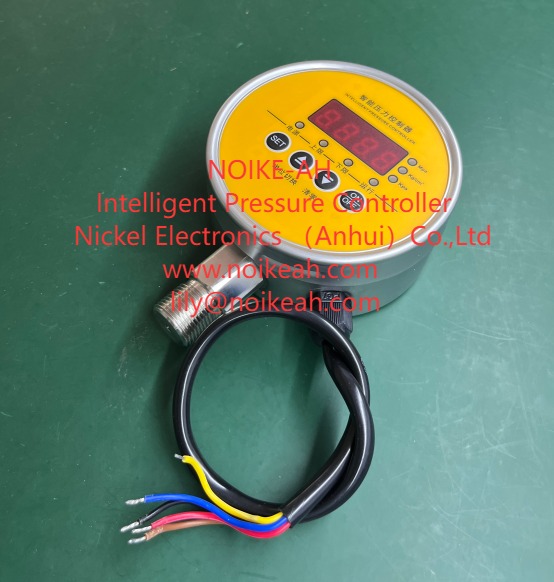
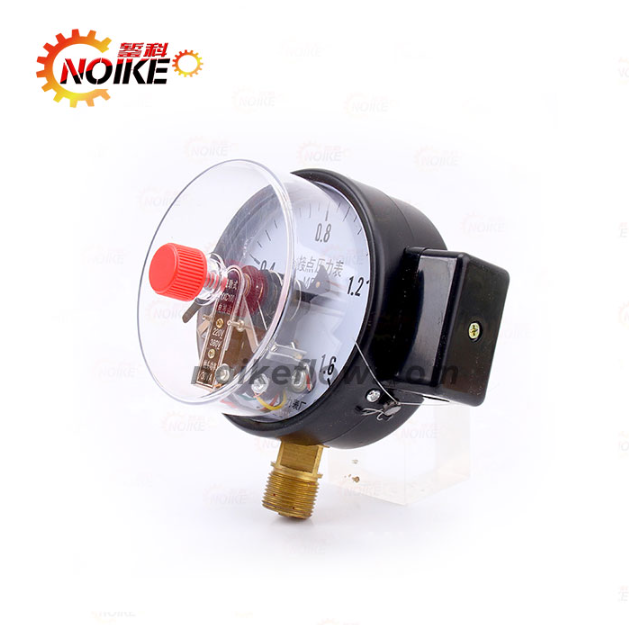
Liquid-Filled Pressure Gauge
Liquid-filled gauges are used to improve readability and reduce pointer movement under vibration or light-to-moderate pulsation.
Ashcroft explains that glycerin, silicone, or halocarbon filling helps dampen pulsation and vibration, lubricates internal components, and reduces condensation on the window, though liquid-filled gauges may still leak under severe vibration or large temperature changes.
Use liquid-filled gauges for:
- pump discharge pressure;
- hydraulic systems;
- compressor systems;
- vibrating equipment;
- pressure readings with pointer flutter.
Liquid filling does not replace a snubber, pulsation dampener, or overpressure protector when severe pressure spikes exist.
Overpressure Protection
Use overpressure protection when the gauge may experience pressure above its rated range or overpressure limit.
Typical signs include:
- pointer not returning to zero;
- pointer bent or damaged;
- pointer hitting the stop pin;
- repeated gauge failure after pump start;
- failure after valve closing or hydraulic valve switching.
Swagelok notes that a bent, broken, or nicked pointer often indicates a sudden pressure spike caused by pump cycling or valve operation, and this can lead to Bourdon tube rupture and gauge failure.
Quick Selection Logic
| Site Condition | Recommended Solution |
|---|---|
| Stable pressure | standard pressure gauge |
| Mechanical vibration | anti-vibration or liquid-filled gauge |
| Pointer flutter | liquid-filled gauge |
| Pump discharge pulsation | liquid-filled gauge + snubber |
| Reciprocating / diaphragm pump | pulsation dampener + snubber |
| Hydraulic shock | hydraulic snubber + overpressure protection |
| Pressure spikes | overpressure protector |
| Corrosive media | diaphragm seal with compatible material |
| Slurry or dirty media | diaphragm gauge or flush diaphragm |
| Remote monitoring required | pressure transmitter |
| Protection / interlock required | pressure switch |
NOIKE-AH Application
For pump systems, booster pumps, hydraulic units, compressors, water treatment, chemical dosing skids, and MRO replacement, NOIKE-AH can provide pressure gauges, pressure switches, pressure transmitters, flow switches, flow meters, temperature sensors, and level sensors.
A typical solution includes:
| Function | Product |
|---|---|
| Local indication | pressure gauge / liquid-filled pressure gauge |
| Continuous feedback | pressure transmitter, 4–20mA |
| Protection | pressure switch |
| Pulsation reduction | snubber or damping device |
| Overpressure protection | overpressure protector |
| Corrosive or dirty media | diaphragm seal / flush diaphragm |
Conclusion
A pressure gauge needs special structure only when the field condition requires it.
Use:
- standard gauge for stable pressure;
- anti-vibration gauge for mechanical vibration;
- liquid-filled gauge for pointer flutter and vibration;
- snubber for pressure pulsation;
- pulsation dampener for strong pulsation sources;
- overpressure protector for pressure spikes;
- diaphragm seal for corrosive, viscous, dirty, or clogging media.
The correct selection sequence is:
installation point → normal pressure → maximum pressure → vibration → pulsation → pressure spike → medium → clogging/corrosion → gauge type → protection accessory → transmitter / switch combination
About NOIKE-AH
Nickel Electronics (Anhui) Co., Ltd (NOIKE-AH) is a global manufacturer of high-precision sensors for measuring and monitoring flow, pressure, temperature, level etc,.
With decades of engineering experience, NOIKE-AH provides reliable sensing solutions that ensure accuracy, efficiency, and safety across industries such as chemical processing, water treatment, food & beverage, pharmaceuticals, and energy.
Our intelligent measurement technology enables customers to gain real-time insights, improve process optimization, and achieve predictive maintenance through data-driven control.
Driven by innovation, NOIKE-AH continues to advance industrial automation with smart digital instruments, IIoT-ready solutions, and customized system integration, empowering industries worldwide to reach new standards in process reliability and performance.



