
Pump Discharge Pressure Fluctuation and Severe Gauge Pointer Flutter Direct Answer
Severe pressure gauge pointer flutter at the pump discharge is usually not just a gauge problem. It is commonly caused by pressure pulsation, mechanical vibration, water hammer, poor installation point, unsuitable gauge type or a blocked pressure connection.
Ashcroft notes that excessive pulsation and vibration are leading causes of internal wear, pointer instability and premature gauge damage. WIKA also lists mechanical vibration, pulsation, pressure spikes, overpressure, corrosion and clogging as common causes of pressure gauge failure.
The first step is to identify whether the system pressure is truly fluctuating or the gauge is simply being affected by vibration.
Why the Pressure Gauge Pointer Shakes
| Symptom | Possible Cause | What to Check |
|---|---|---|
| Fast pointer movement | Pressure pulsation | Whether it follows pump cycles |
| Pointer shakes but process is stable | Mechanical vibration | Pump, pipe and gauge mounting |
| Sudden pressure spike | Water hammer or valve action | Valve closing, check valve, pump start-stop |
| Short gauge life | No damping protection | Need for snubber or dampener |
| Delayed or stuck reading | Blocked gauge port | Sediment, scale, oil or clogging |
Rapidly fluctuating pressure gauge readings are often related to pump pulsation, water hammer or strong mechanical vibration. A pressure snubber or liquid-filled gauge is commonly used to reduce these effects.
How to Diagnose the Problem
1. Compare different pressure readings
If the mechanical gauge pointer shakes but the digital gauge or pressure transmitter signal is stable, the issue may mainly be gauge vibration.
If the mechanical gauge, digital gauge and PLC pressure value all fluctuate together, the pump discharge pressure is truly pulsating.
2. Check whether the fluctuation is periodic
If the fluctuation follows the pump cycle, it may be discharge pulsation. This is common in diaphragm pumps, piston pumps, reciprocating pumps and some booster systems.
If the fluctuation is irregular and the pipe is vibrating, mechanical vibration is more likely.
3. Check the installation point
A pressure gauge installed directly after the pump outlet, valve, elbow or check valve is more likely to receive unstable pressure and vibration. A more stable straight pipe section or remote mounting point is preferred.
4. Check for blockage
Scale, sediment, oil, sludge or crystallized media can block the pressure connection. A blocked port may cause delayed readings, unstable readings or wrong pressure indication.
Why Pointer Flutter Should Not Be Ignored
Long-term pointer flutter can cause:
- poor readability;
- wrong pressure judgment;
- difficult pump commissioning;
- internal gauge wear;
- pointer shift or failure;
- damage to pressure switches and transmitters;
- after-sales misjudgment.
WIKA’s pressure pulsation material states that long-term pulsation makes a standard Bourdon tube gauge difficult to read because the pointer flutters, and the constant movement can wear internal components and shorten instrument life.
How to Solve the Problem
Use a liquid-filled or digital pressure gauge
For mechanical vibration or light pulsation, a liquid-filled pressure gauge or digital pressure gauge can improve readability. WIKA notes that liquid filling helps protect instruments against pressure spikes, pulsation and vibration.
Add a snubber or pulsation dampener
For strong pump discharge pulsation, install a pressure snubber, pulsation dampener or restrictor before the gauge, switch or transmitter. Ashcroft explains that snubbers and pulsation dampeners absorb sudden pressure changes common in pump systems, helping protect instruments and extend service life.
Avoid high-disturbance installation points
Do not install the gauge directly after the pump outlet, valve, elbow or strong vibration point if a better location is available. Remote mounting can also reduce mechanical vibration.
Use a pressure transmitter for control
For pump control panels, constant pressure systems and automated pump sets, a pressure transmitter should provide continuous pressure feedback to PLC / VFD / control panel. The gauge can remain as a local indication device.
NOIKE-AH Application Solution
Local pressure display
NOIKE-AH Digital Pressure Gauge can be used for pump discharge pressure display, pump room inspection, field commissioning and MRO replacement.
Continuous pressure monitoring
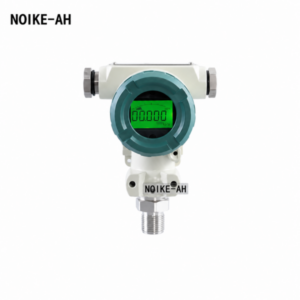
NOIKE-AH NT30D Pressure Transmitter can convert pump discharge pressure into a continuous signal for PLC, VFD or remote monitoring.
Best for:
- pump outlet pressure monitoring
- PLC / VFD pressure feedback
- constant pressure water supply
- pump automation system
Alarm and protection
NOIKE-AH NT30B Intelligent Pressure Switch can be used for high/low pressure alarm and protection output. In systems with strong pulsation, proper hysteresis and delay settings should be used to avoid false switching.
NOIKE-AH’s product range covers flow, pressure, temperature, liquid level, position measurement and protection, including pressure-related products for industrial monitoring and control applications. (Noike-AH)
Product Combination
| Application | Recommended Product | Function |
|---|---|---|
| Severe gauge pointer flutter | Digital Pressure Gauge | Improve local readability |
| Continuous pump outlet monitoring | NT30D Pressure Transmitter | Pressure feedback to PLC / VFD |
| High/low pressure alarm | NT30B Intelligent Pressure Switch | Alarm and protection logic |
| Strong pressure pulsation | Gauge + snubber / dampener | Reduce pressure shock and protect instruments |
| High-reliability pump set | NT30D + NT30B + Digital Pressure Gauge | Monitoring, protection and display |
Conclusion
When pump discharge pressure fluctuates and the pressure gauge pointer shakes severely, the correct diagnostic order is:
- Confirm whether the pressure is truly fluctuating.
- Check mechanical vibration and installation position.
- Check water hammer, valve action and pump start-stop behavior.
- Inspect the pressure gauge and pressure connection.
- Use the correct protection and monitoring solution.
NOIKE-AH recommends using a Digital Pressure Gauge for local display, NT30D Pressure Transmitter for continuous pressure feedback, and NT30B Intelligent Pressure Switch for alarm and protection. For strong pump pulsation, a snubber or pulsation dampener should be added to reduce gauge flutter, protect instruments and reduce after-sales misjudgment.



