
Thermal Dispersion Flow Switch for Water and Compressed Air
Can One Thermal Dispersion Flow Switch Be Used on Both Cooling Water and Compressed Air Lines?
SEO publishing details
- SEO title: Can One Flow Switch Monitor Both Cooling Water and Compressed Air?
- Focus keyphrase: flow switch for water and compressed air
- Suggested URL slug:
flow-switch-water-compressed-air - Meta description: Can one thermal dispersion flow switch monitor both cooling water and compressed air? Learn how dual-purpose flow switches work and what to verify before installation.
- Excerpt: A thermal dispersion flow switch can be used on both liquid and gas applications when the selected model is suitable for each medium. Learn how to check flow range, pressure, temperature, installation, and PLC output before specifying one.
- Suggested category: Flow Switches
- Suggested tags: Thermal Dispersion Flow Switch, Cooling Water Flow Switch, Compressed Air Flow Switch, NK300, Industrial Flow Monitoring
Short Answer
Yes. A thermal dispersion flow switch designed for both liquids and gases can be used on a cooling-water line and on a separate compressed-air line. The same product model or product family may cover both applications, but each installation must be checked and commissioned for its own medium and operating conditions.
This does not mean that one sensor can monitor two separate pipes at the same time. It also does not mean that the same switching setting will work for water and compressed air.
The NOIKE-AH NK300 Electronic Flow Switch is specified for water, oil, and air. It uses thermal dispersion technology to detect whether flow has crossed an adjustable switching threshold. Before ordering, confirm the medium, flow-velocity range, pressure, temperature, process connection, installation arrangement, power supply, and output type for each line.
Product reference: NOIKE-AH NK300 Electronic Flow Switch
1. What Does “Gas and Liquid Dual-Purpose” Mean?
A gas-and-liquid dual-purpose flow switch is designed to operate with more than one type of process medium. For example, a plant may use the same model family for:
- Cooling water: monitoring circulation in chillers, machine tools, laser equipment, or other cooling circuits.
- Lubricating or hydraulic oil: confirming flow in lubrication and hydraulic systems, where the medium and operating conditions fall within the product specifications.
- Compressed air: monitoring air movement in pneumatic equipment or compressed-air distribution lines.
The key distinction is that the product family supports different media in separate installations. A flow switch installed in a water pipe detects the water-flow condition in that pipe; another unit installed in an air line detects the air-flow condition there.
The sensor must be selected and set up for the medium in its own pipeline. Do not transfer a switching threshold from a water application to an air application without checking the relevant operating range and commissioning the device again.
2. How Does a Thermal Dispersion Flow Switch Detect Both Liquids and Gases?
A thermal dispersion flow switch detects flow through heat transfer rather than through the movement of a mechanical paddle or turbine.
The NK300 uses two sensing resistors inside its probe:
- One resistor is heated.
- The second resistor measures the temperature of the process medium.
- When the medium flows past the probe, it carries heat away from the heated resistor.
- The electronics evaluate the resulting thermal difference and change the switching output when the configured threshold is reached.
The principle can be applied to both liquids and gases. However, heat-transfer behavior differs between media. Water, oil, and air therefore have different published flow-setting ranges on the NK300.
This is why the device should be commissioned for the actual medium and required minimum-flow condition. Thermal dispersion technology does not make the flow settings interchangeable across all fluids.
The thermal dispersion principle is based on heat transfer between a heated sensing element and the flowing medium. The sensor response is influenced by the thermal properties of the medium, which is why operating settings should be verified for each application. For a technical explanation, see Endress+Hauser’s guide to the thermal flow measuring principle.
3. What Should You Check Before Using the Same Model on Water and Air?
Before specifying a dual-purpose flow switch for two different lines, review the following points for each installation.
3.1 Confirm the Medium and Flow-Velocity Range
The first check is whether the expected operating velocity falls within the product’s published setting range.
For the NK300, the official product page lists these ranges:
| Medium | Published flow-setting range |
|---|---|
| Water | 1–150 cm/s |
| Oil | 3–300 cm/s |
| Air | 20–2000 cm/s |
These are medium-specific ranges. Do not assume that a water setting can be applied directly to compressed air.
For a practical selection, establish the normal flow velocity and the minimum acceptable flow condition in each line. If the expected operating point is outside the published range, consult the manufacturer before specifying the switch.
3.2 Check Operating Pressure and Temperature
The NK300 product page specifies:
- Maximum pressure: 100 bar
- Medium temperature: -20°C to +80°C
- Ambient temperature: -20°C to +80°C
Compare these limits with the maximum and minimum conditions of both systems. The fact that a cooling-water circuit operates at a relatively low pressure does not remove the need to check the compressed-air line separately.
The maximum allowable pressure and temperature must be respected at the sensor installation point. If the application has pressure or temperature transients, include them in the engineering review.
3.3 Verify Probe and Wetted-Material Compatibility
The NK300 product page lists a stainless-steel probe and a PBT housing.
Material compatibility still needs to be checked against the actual process medium, additives, contaminants, and cleaning chemicals. Do not assume compatibility with every coolant formulation, glycol mixture, chemical solution, or compressor condensate solely because the product is described as suitable for water, oil, and air.
For non-standard media or uncertain chemical compatibility, provide the manufacturer with the fluid name and composition before ordering.
3.4 Select the Correct Electrical Output
The NK300 is listed with three output options:
- PNP
- NPN
- Relay (SPDT, NO + NC)
The selected output must match the PLC or controller input and the electrical design of the machine. Check the controller’s input type, supply voltage, wiring arrangement, and load requirements against the exact NK300 configuration and wiring diagram.
Do not assume that a PNP unit can be substituted directly for an NPN unit without changing the wiring or input arrangement. Where two separate systems use different control architectures, specify the appropriate output configuration for each installation.
3.5 Confirm the Process Connection and Probe Installation
Check the pipe connection, probe length, insertion depth, and available installation space against the selected model’s dimensional drawing and order configuration.
For reliable detection:
- Install the probe in a section of pipe that remains full of the process medium under normal operation.
- Avoid locations immediately affected by strong turbulence from pumps, valves, elbows, or other fittings where a more suitable straight section is available.
- Insert the probe to the specified installation depth.
- Check the flow-direction marking on the probe, where provided.
- Allow approximately 8 seconds after power-up for initialization before evaluating the switching output.
The exact mounting position and insertion depth should follow the product installation drawing and the piping arrangement. Do not use a generic insertion dimension for every pipe size.
4. Example: Two Separate Installations in One Factory
A factory may need flow monitoring in both a cooling-water circuit and a compressed-air network.
Cooling-water line
A flow switch can be installed in the cooling-water circuit to confirm whether the flow condition has reached the required threshold. Its switching output can be connected to the machine controller or PLC to provide a low-flow alarm or an interlock, subject to the machine’s control and safety design.
Before installation, verify the minimum required water flow, the NK300 water setting range, the pipe size, the pressure and temperature, and the selected output.
Compressed-air line
A separate unit from the same product family can be installed in a compressed-air line to monitor the air-flow condition. Its output can be connected to the relevant PLC or monitoring system.
Before installation, verify that the air velocity is within the published air setting range, that the pressure and temperature are within limits, and that the selected output matches the controller.
The two installations may use the same model family, but they are separate sensing points. Each unit needs its own installation check and switching-threshold commissioning.
5. NK300 Technical Specifications
The following values are published on the official NOIKE-AH NK300 product page.
| Parameter | Published specification |
|---|---|
| Model | NK300 |
| Measuring principle | Thermal dispersion |
| Medium | Water, oil, air |
| Water flow-setting range | 1–150 cm/s |
| Oil flow-setting range | 3–300 cm/s |
| Air flow-setting range | 20–2000 cm/s |
| Output | PNP / NPN / Relay (SPDT NO + NC) |
| Power supply | 24 V DC ±20% or 230 V AC ±15% |
| Maximum switching current | 400 mA (PNP/NPN); 4 A (Relay) |
| Flow indication | 6 LEDs |
| Setting method | Potentiometer |
| Maximum pressure | 100 bar |
| Medium temperature | -20°C to +80°C |
| Ambient temperature | -20°C to +80°C |
| Response time | 1–13 s; typical 2 s |
| Initialization time | Approximately 8 s |
| Protection rating | IP67 |
| Probe material | Stainless steel |
| Housing material | PBT |
| Electrical connection | M12 connector / direct cable |
The published response time is 1–13 seconds, with a typical value of approximately 2 seconds. The actual response in an application should be considered when designing alarm delays, startup logic, and equipment interlocks.
The NK300 is a flow switch, not a continuous flow meter. Its switching output indicates whether the flow condition has crossed a configured threshold; it does not provide a numerical flow-rate reading.
6. When Is a Dual-Purpose Thermal Flow Switch a Suitable Choice?
A thermal dispersion flow switch may be suitable when:
- The application requires flow/no-flow or threshold-based flow confirmation.
- The process medium is within the product’s specified media and operating range.
- The required flow velocity is within the relevant medium-specific setting range.
- The pressure, temperature, materials, and installation conditions are compatible.
- The PLC or controller can accept the selected PNP, NPN, or relay output.
It may not be the correct device when the application requires an exact continuous flow-rate value, totalized volume, or a calibrated mass-flow measurement. In those cases, evaluate a suitable flow meter or flow transmitter instead.
For applications involving hazardous areas, special approvals, unusual media, or operating conditions outside the published limits, select an instrument with the required verified specifications and certifications.
Frequently Asked Questions
Can one NK300 monitor cooling water and compressed air at the same time?
No. One installed sensor monitors the flow condition at its own installation point. To monitor a water line and a separate compressed-air line, use a separate sensor at each required measurement point.
Can I use the same switching setting for water and compressed air?
Do not assume so. The NK300 has different published flow-setting ranges for water, oil, and air because the thermal response depends on the medium. Set and commission each unit for its own process medium and required threshold.
Is the NK300 a flow meter?
No. The NK300 is a threshold-based electronic flow switch. It provides a switching output when the flow condition reaches the configured threshold. It does not display an exact flow rate.
What outputs are available on the NK300?
The official product page lists PNP, NPN, and Relay (SPDT NO + NC) output options. Confirm the required output and wiring configuration when ordering.
Can the NK300 be used for liquids other than water and oil?
The published media list identifies water, oil, and air. For glycol mixtures, chemical solutions, or other non-standard fluids, verify the material and thermal compatibility with NOIKE-AH before ordering.
Does the NK300 require maintenance?
The NK300 has no moving mechanical sensing parts. The official installation recommendations nevertheless advise periodic probe cleaning when the medium contains contamination or deposits.
Conclusion
A thermal dispersion flow switch can serve both cooling-water and compressed-air applications when the product is designed for both media and each installation meets the relevant operating requirements.
The important point is not simply whether one model is described as gas-and-liquid dual-purpose. Engineers should verify the medium-specific flow range, pressure, temperature, material compatibility, probe installation, power supply, and controller output for each line.
The NOIKE-AH NK300 Electronic Flow Switch is specified for water, oil, and air, with PNP, NPN, and relay output options. It can be evaluated for separate liquid and gas flow-monitoring points where its published specifications match the application.
For product details, refer to the NOIKE-AH NK300 Electronic Flow Switch. For selection assistance, provide the medium, expected flow velocity, pipe size, operating pressure and temperature, process connection, power supply, and required output.
Suggested internal links
Add these links naturally where the corresponding topic is discussed:
- NOIKE-AH NK300 Electronic Flow Switch — link from the first product mention and the technical specifications section.
- Flow Switch vs. Flow Sensor vs. Flow Meter — link from the section explaining that NK300 is a threshold switch, not a flow meter.
- Pump Dry-Run Protection: Flow Switch vs. Level Switch vs. Current Monitoring — link from the cooling-water / pump-protection discussion.
- Chiller Low-Flow Alarm Troubleshooting: Causes, Flow Switch Testing, and Solutions — link from the cooling-water application example.
Image publishing information
- Recommended filename:
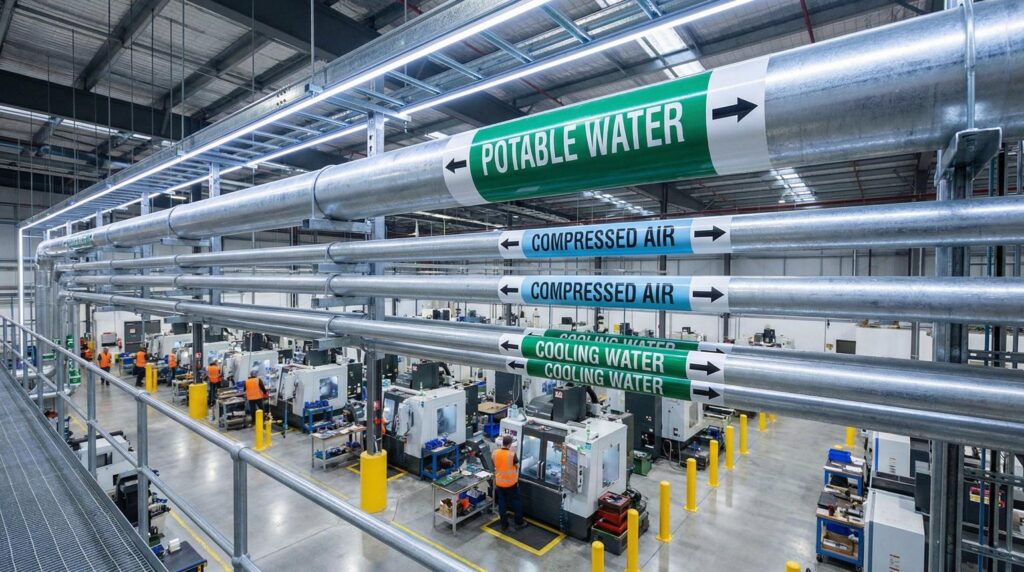
flow-switch-water-compressed-air-nk300.jpg - Alt text:
Thermal dispersion flow switches installed on separate cooling water and compressed air pipelines - Image title:
Flow Switch for Cooling Water and Compressed Air - Caption:
A dual-purpose thermal dispersion flow switch model family can be applied to separate liquid and gas lines when each installation meets the specified operating conditions.