
Level Sensors
In standard manufacturing facilities, the failure of a fluid sensor typically results in a temporary system shutdown, minor material waste, or a maintenance headache. However, in chemical processing plants, petrochemical refineries, and mining operations, the stakes are exponentially higher. In these hazardous areas, deploying the wrong sensor does not just risk downtime—it risks human lives and catastrophic facility destruction.
Explosive atmospheres require a fundamentally different approach to instrumentation. As a trusted manufacturer of precision industrial sensors, NOIKE-AH (臬克) provides this definitive guide to selecting flow and level sensors for harsh and volatile environments, ensuring your operations remain both highly efficient and rigorously safe.
1. Understanding the Hazard: The “Fire Triangle” and ATEX
An explosion requires three elements to occur simultaneously: Fuel (flammable gases, vapors, or combustible dust), Oxygen (air), and an Ignition Source.
Standard electronic sensors—even those operating on low voltages—can generate micro-sparks during switching cycles, or their housings can heat up sufficiently to act as an ignition source. To prevent this, regulatory bodies enforce strict safety standards, the most globally recognized being the ATEX Directive (in Europe) and IECEx.
When selecting sensors for these zones, engineers must understand the protection methods:
- Ex d (Flameproof Enclosure): The sensor’s housing is built so robustly that if an explosive gas penetrates it and ignites inside, the enclosure will contain the explosion and cool the escaping flames, preventing them from igniting the outside atmosphere.
- Ex ia/ib (Intrinsically Safe): The electrical energy within the sensor circuit is restricted to such a low level that it is physically incapable of generating a spark or thermal effect strong enough to ignite a volatile atmosphere.
2. Flow Control in Volatile Zones: Beyond Standard Switches
Monitoring the flow of cooling water, dosing chemicals, or lubricating oils in a hazardous zone is critical for preventing pump dry-runs or reactor overheating. Standard mechanical paddle switches or basic electronic sensors cannot be legally or safely installed in these areas.
Furthermore, harsh chemical environments often feature highly corrosive fluids that will rapidly dissolve standard brass or lower-grade stainless steel wetted parts.
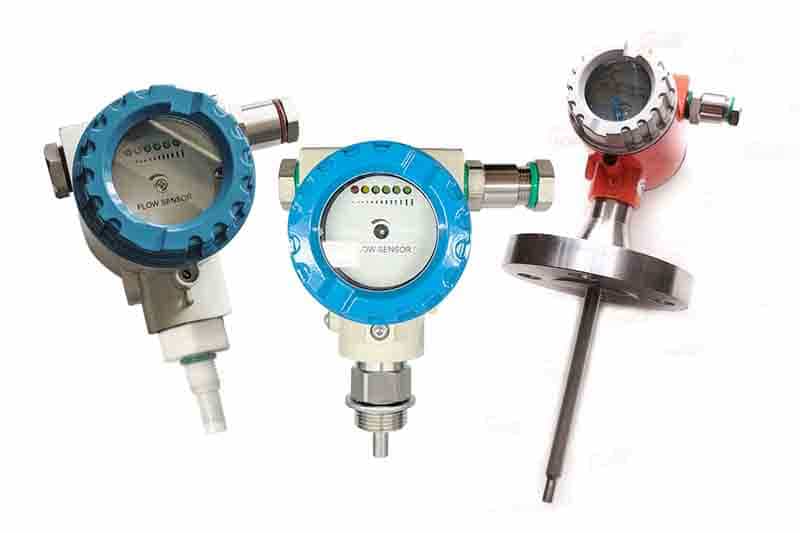
The NOIKE-AH Engineering Solution: For these critical nodes, the NOIKE-AH NK33EX Series Explosion-Proof Flow Switch is the mandatory standard.
- ATEX Certified Safety: Engineered with a heavy-duty flameproof (Ex d) enclosure, it completely isolates internal electronics from the external hazardous atmosphere.
- Thermal Dispersion Technology: Featuring no moving parts, it is immune to mechanical jamming and provides highly sensitive flow detection for aggressive chemicals, volatile hydrocarbons, and critical cooling loops.
- Corrosion Resistance: The fully sealed, high-grade stainless steel probe ensures long-term survivability in chemically aggressive environments.
3. Level Sensing in Corrosive Tanks
Level control in hazardous areas presents its own set of challenges. Storage tanks in chemical workshops or pure water purification plants often contain fluids that are either highly reactive or extremely corrosive (such as strong acids, alkalis, or solvents).
If a level switch fails to detect a high-level state, a volatile tank can overflow, creating an immediate explosive hazard or an environmental disaster. If it fails to detect a low-level state, the pump may run dry, overheat, and become an ignition source itself.
The NOIKE-AH Engineering Solution: For applications involving conductive but highly corrosive fluids (such as aggressive wastewater or chemical slurries), the NOIKE-AH WP-DJ Electrode Level Switch offers exceptional reliability. By utilizing specialized, chemical-resistant wetted materials, it provides sanitary, non-contaminating, and fail-safe liquid control. When wired through approved intrinsically safe barriers (Zener barriers), it forms a perfectly safe monitoring loop for explosive zones.
4. Best Practices for Hazardous Area Installation
Even the highest-quality ATEX-certified sensor becomes a deadly liability if installed incorrectly. Ensure your engineering team adheres to these practices:
- Cable Glands are Critical: An Ex d sensor must be connected using specifically rated explosion-proof cable glands. Using standard plastic glands completely invalidates the explosion-proof integrity of the housing.
- Dedicated Grounding: Ensure all sensor housings are tied to the plant’s equipotential bonding (grounding) system to prevent static electricity build-up.
- Material Compatibility Check: Always verify that the sensor’s wetted parts (e.g., 316L Stainless Steel, PTFE, Hastelloy) are chemically compatible with the process fluid.
5. The Supply Chain Advantage: Sourcing Safety Without Delays
Sourcing explosion-proof instrumentation often traps procurement managers in a nightmare of long lead times. Western automation conglomerates frequently require 12 to 16 weeks to deliver specialized ATEX-certified components, severely delaying plant commissioning or critical maintenance turnarounds.
NOIKE-AH (臬克) disrupts this bottleneck by combining rigorous safety compliance with unparalleled supply chain agility:
- Global Safety Compliance: Our explosion-proof sensors are rigorously tested and CE/ATEX certified, guaranteeing tier-one industrial safety.
- No Minimum Order Penalties: Whether you need a single replacement flow switch for a refinery or a customized batch for a new chemical skid, we support a 1-piece Minimum Order Quantity (OEM/ODM).
- Rapid Engineering Triage: Safety issues cannot wait. We guarantee a 5-minute technical response to help you specify the exact sensor required for your hazardous zone.



