
Flow Measurement Executive Summary
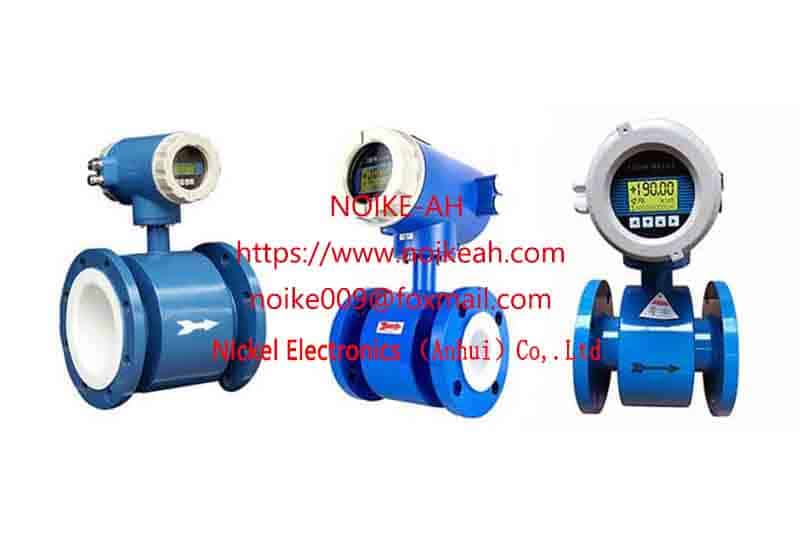
In Saudi Arabia’s municipal and industrial wastewater treatment sectors, influent flow measurement faces severe challenges due to fluids heavily laden with desert quartz sand, industrial grease, and viscous sludge. These harsh conditions expose traditional electromagnetic flow meters to critical operational risks: electrode signal shielding caused by grease, and liner abrasion leading to perforation. Leveraging flexible customization capabilities, Noike-AH provides an ideal alternative for Saudi water contractors by equipping meters with highly abrasion-resistant Polyurethane (PU) or Ceramic liners, alongside anti-coating electrode designs. This approach significantly extends equipment lifespan and minimizes maintenance downtime.
I. Deconstructing Physical Principles and Saudi On-Site Pain Points
1. The Signal Shielding Challenge: The “Insulation Effect” of Grease and Sludge
The proper operation of an electromagnetic flow meter relies entirely on the metal electrodes maintaining direct physical contact with the conductive fluid to collect the induced voltage.
- Saudi On-Site Pain Point: Saudi industrial wastewater often contains high concentrations of oils and viscous sludge. Over time, these substances accumulate and form a coating on the inner wall and electrodes. Because electromagnetic flow meters are closed-pipe systems, this internal debris accumulation remains completely hidden from external view. This physical “insulation layer” blocks voltage signal transmission, causing the signal to weaken and resulting in erratic readings or complete instrument failure.
2. The Physical Degradation Challenge: Heavy Sand Abrasion in Desert Environments
- Saudi On-Site Pain Point: Due to Saudi Arabia’s unique geography, raw water and wastewater inevitably contain high-hardness particulate matter, such as suspended fine desert sand and industrial debris. When high-velocity abrasive slurries flow through the pipe, standard rubber or PTFE (Polytetrafluoroethylene) liners are rapidly eroded. Once the insulating liner is worn through, wastewater penetrates the meter’s interior, short-circuiting the excitation coils and instantly destroying the device.
II. Industry Status Quo and Limitations of Standard Solutions
Facing Saudi Arabia’s severe wastewater conditions, standard off-the-shelf flow meters reveal significant drawbacks:
- Extremely High OPEX (Operational Expenditure): Standard flush electrodes require regular cleaning regimens. Once severe scaling occurs, the plant is forced to shut down, drain the pipeline, and manually clean the electrodes, causing massive operational losses.
- Rigid Material Selection: Many entry-level wastewater meters from international brands only offer basic EPDM rubber liners. While cost-effective for mild fluids, EPDM has limited abrasion resistance, making it incapable of withstanding long-term erosion from the abrasive suspensions commonly found in the region.
III. Noike-AH’s Anti-Abrasion and Anti-Scaling Custom Solutions
As an industrial instrument manufacturer with deep engineering expertise, Noike-AH’s core competitiveness lies in providing targeted material customization and structural optimization based on specific wastewater compositions:
1. Advanced Anti-Abrasion Liner Materials
For slurries and wastewater containing massive solid particles and sand, Noike-AH customizes Polyurethane (PU) or high-strength Ceramic liners.
- Polyurethane (PU) liners offer excellent abrasion resistance by absorbing the impact energy of solid particles, making them the preferred choice for abrasive suspensions. For extreme abrasion scenarios, ceramic liners provide virtually permanent physical durability.
2. Anti-Coating Electrode Designs
To resolve the signal loss caused by grease-coated electrodes, Noike-AH upgrades the structural design:
- Scraper Electrodes: Site operators do not need to shut down or dismantle the pipeline; they can simply rotate an external handle to mechanically scrape off grease and scaling from the electrode surface, drastically reducing daily maintenance costs.
- Protruding Self-Cleaning Electrodes: Utilizing specially shaped protruding electrodes allows the fluid’s own velocity to create localized turbulence, continuously washing the electrode surface to achieve a “self-cleaning” effect and delay grease adhesion.
3. High-Frequency Signal Processing for Slurry Noise
Solid particles striking the electrodes in wastewater generate severe electromagnetic slurry noise. Noike-AH’s intelligent transmitters employ high-frequency signal processing and advanced digital filtering algorithms. This enables the meter to accurately isolate the true flow signal from erratic electrical noise spikes caused by particle impacts, ensuring the final 4-20mA output remains stable and smooth.



