
Interference on Vortex Flowmeters
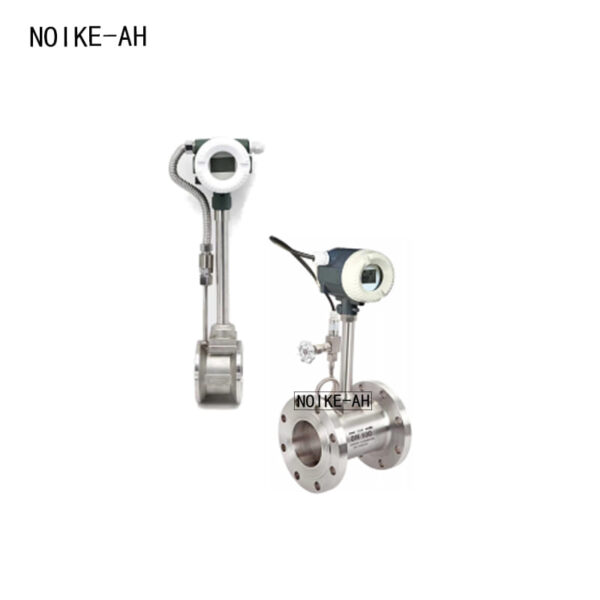
In petrochemical refineries, the precise measurement of steam and utility gases is essential for energy management and operational cost control. Vortex flowmeters are widely adopted for this purpose due to their lack of moving parts and inherently high reliability. However, large compressors, pumps, and throttling valves in these plants generate severe mechanical pipe vibrations. Standard vortex flowmeters are highly susceptible to misinterpreting these mechanical vibrations as genuine fluid vortex signals, leading to substantial “phantom flow” errors. Addressing this critical industry pain point, NOIKE-AH introduces its intelligent vortex flowmeters equipped with advanced Digital Signal Processing (DSP) technology and integrated temperature-pressure compensation. By utilizing spectral analysis algorithms to automatically isolate and filter out vibration noise, Noike-AH provides petrochemical facilities with a high-precision, highly vibration-resistant alternative for custody-transfer steam measurement.
I. Deconstructing Physical Principles and Petrochemical On-Site Pain Points
1. Physical Measurement Boundary: Karman Vortex Street and Vibration Sensitivity
- Physical Principle: Vortex flowmeters operate based on the Karman vortex street principle. As fluid flows past a bluff body (shedder bar) installed inside the pipe, it generates alternating, regular vortices on both sides downstream. The shedding frequency of these vortices is directly proportional to the fluid’s velocity. The sensor calculates the flow rate by detecting this specific frequency.
- Petrochemical On-Site Pain Point: The sensors utilized in vortex meters are fundamentally piezoelectric components that are extremely sensitive to physical stress and frequency. In a petrochemical plant, pipelines are frequently subjected to intense mechanical vibrations originating from the high-speed operation of large pumps, compressors, or the turbulence of valve throttling. If a flowmeter is installed near these vibration sources, the external mechanical vibrations are easily misread by the sensor as authentic vortex shedding signals.
2. The Custody Transfer Crisis: Phantom Flow from “Zero Flow” Conditions
- Petrochemical On-Site Pain Point: The most immediate and detrimental consequence of this vibration interference is that even when pipeline valves are completely closed and no fluid is flowing, the flowmeter continues to display a massive “phantom flow” reading simply due to ambient micro-tremors in the piping. In a documented case at a chemical plant, pipeline vibration interference caused the measured values of a steam metering system to read 15% higher than the actual true flow rate, eventually forcing frustrated operators to replace the meters with alternative technologies. Such severe inaccuracies lead to massive financial losses in internal energy allocation or external custody transfer billing for steam utilities.
II. Industry Status Quo and Limitations of Standard Solutions
When dealing with vibration interference, field engineers using traditional analog vortex flowmeters are often forced into detrimental technical compromises:
- The Blunt “Small Signal Cut-Off” Approach: The most common traditional workaround to mask vibration-induced false alarms is to drastically raise the transmitter’s “small signal cut-off” threshold. While this effectively suppresses the vibration noise when there is zero flow, it simultaneously eliminates genuine low-velocity flow signals. This causes the flowmeter to abruptly drop to zero during low-load operations, severely sacrificing the instrument’s usable turndown ratio.
- Lack of Dynamic Immunity: The basic analog circuitry of many entry-level vortex flowmeters cannot distinguish between genuine fluid vortices and mechanical vibration within a complex frequency waveform. They passively amplify all frequency inputs, causing measurement errors to skyrocket in mechanically noisy environments.
III. Noike-AH’s Anti-Vibration Upgrade and Intelligent Metering Solutions
By incorporating advanced digital signal processing technology directly into the transmitter architecture, NOIKE-AH addresses the root cause of mechanical vibration interference at the algorithmic level:
1. Core Technology Upgrade: DSP Spectral Analysis and Anti-Vibration Filtering
NOIKE-AH equips its smart vortex steam flowmeters with advanced Digital Signal Processing (DSP) chips, supporting both standard pulse signals and reliable 4-20mA analog outputs. This system does not merely passively receive signals; it performs real-time spectral analysis. Because the frequency signatures of mechanical vibrations (typically low-frequency or fixed-frequency resonance bands) differ significantly from true Karman vortex frequencies (which dynamically shift with flow velocity), NOIKE-AH’s DSP algorithm can intelligently identify and automatically filter out environmental mechanical noise. This ensures the output of an accurate, true flow signal, even on intensely vibrating steam pipelines, without having to over-rely on small signal cut-off limits.
2. Integrated Temperature and Pressure Compensation for Steam
The density of steam fluctuates drastically with changes in line temperature and pressure. To achieve precise mass flow measurement for steam, NOIKE-AH vortex flowmeters feature integrated high-precision temperature and pressure sensor interfaces, executing dynamic, real-time compensation internally. This guarantees the absolute accuracy of custody transfer data, ensuring stable billing even when the petrochemical steam network experiences significant load variations.
Are you still losing money on inflated steam energy bills due to vortex flowmeters registering ‘phantom flow’ from pipeline vibrations? Or are you missing critical low-flow data because you were forced to increase the small signal cut-off threshold? NOIKE-AH provides smart vortex flowmeters powered by advanced DSP spectral filtering algorithms. We strip away mechanical vibration interference at the core algorithmic level, combining it with real-time temperature and pressure compensation to deliver a high-precision, environment-immune alternative for your critical steam custody transfer applications.”



